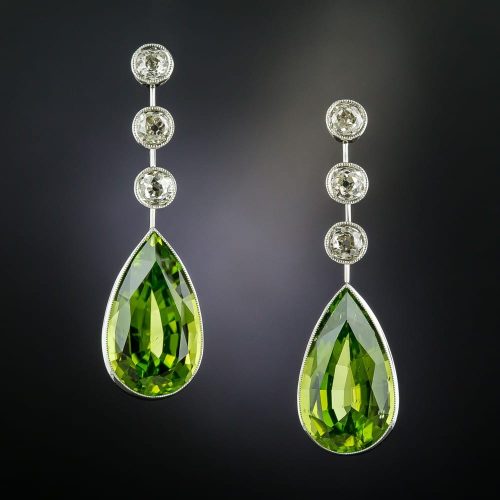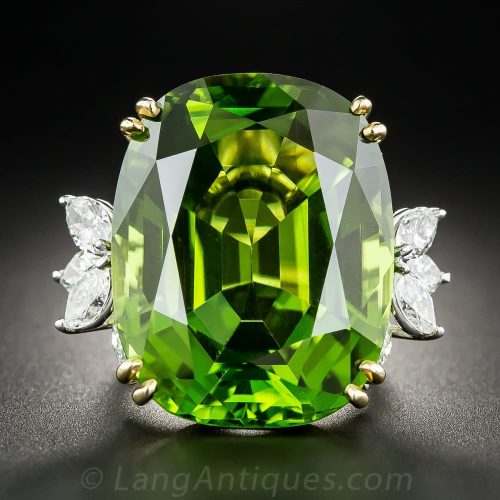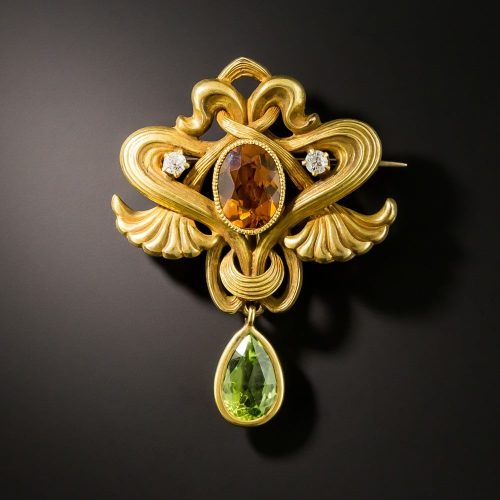
Peridot is the gem variety of the mineral chrysolite or olivine. It is a silicate of iron and magnesium found in basaltic igneous rocks. Although the mineral is fairly common, gem-quality specimens are rare. Peridot is what is termed idiochromatic, meaning that the element causing its color is essential to its composition. The color of peridot varies only slightly as a result of the relative percentages of iron and magnesium. The finest stones will be the richest green.
A Brief History of Peridot
The Egyptians fashioned and wore peridot beads 3500 years ago! The source of this peridot was the island of Zabargad in the western region of the Red Sea, opposite the Egyptian port city of Berenice.
Peridot was known in ancient times as the “gem of the sun” and believed its powers to dissolve enchantment and banish evil thoughts. To exert its full powers, it had to be set in gold. Then it was guaranteed to chase away terrors of the night and protect against all evil spirits.
Turkish Sultans amassed the largest collection of peridot during the Ottoman Empire. There are hundreds of peridots on display at the Topkapi Museum in Istanbul.
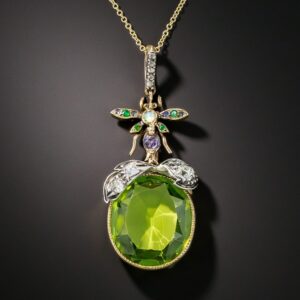
From the mid-1800s, peridot was a favored stone in jewelry, reaching the height of its popularity during the aesthetic period of the Victorian era and the reign of Edward VII of England, who designated it as his favorite gemstone.1 Almost every school of the day – the Pre-Raphaelites, the Arts and Crafts movement, Art Nouveau as well as those working in the Edwardian style – incorporated this gemstone into their designs.
As a compliment to King Edward VII, whose favourite stone they were, there was a fashion for translucent green peridots for necklaces and pendants usually set round with diamonds…2
Peridot is the birthstone for August and commemorates the 16th anniversary.