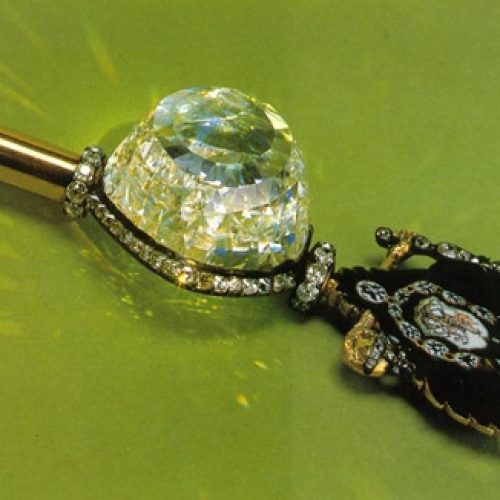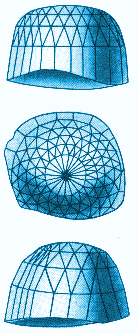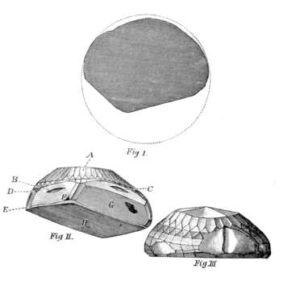
The name indicates a native Indian cut that followed the shape of the rough and often exhibits a large flat base and a reasonably large table facet separated by a sloping array of smaller facets but these features are by no means a requirement for the name Mughal Cut. The best-known example of a Mughal Cut was the fabled Koh-I-Noor (pictured here), which was re-cut into an oval brilliant in 1852 and currently resides in the Tower of London.
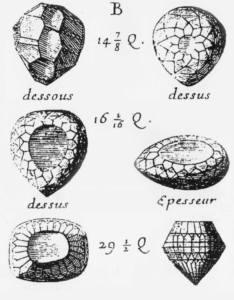
Tavernier has left us with a fair few sketches of Indian native cuts, which illustrate the rather wide variety of possibilities. The term Mughal Cut is better understood to be describing a diamond cut in India in the 16th, 17th or 18th century rather than a certain shape or arrangements of facets:
One famous Mughal Cut diamond which is still to be admired today is the Orlov diamond: