
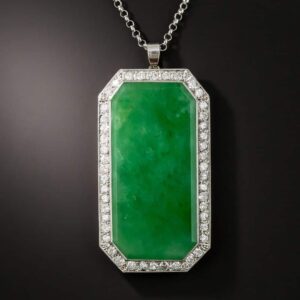
Jadeite is a silicate containing sodium and aluminum. Jadeite occurs in a very wide range of colors, translucencies and textures.
In jewelry, jadeite is the more valuable of the two varieties of jade. Its value is simply a function of its beauty. The criteria used in judging the beauty of jadeite are:
- Color and Tone
- Texture
- Translucency or Clarity
- Desirable Shape or Balance
- Size and Dimensions
- Polish
- Finish, which includes the matching or graduation in a strand of beads
One must also remember that currently, the great majority of jadeite commercially available has undergone treatment to improve its color and translucency. Often the color may not be stable in treated jadeite or the actual structure of the jadeite has been compromised. It can be very difficult to discern treated jadeite from untreated stones. It is imperative that you buy jade from someone who understands the current treatments and has facilities available for thorough testing.
A Brief History of Jadeite
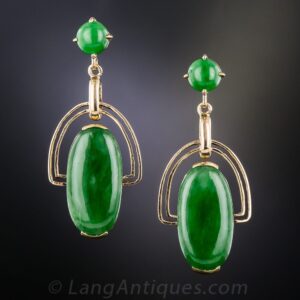
Jadeite was known and highly valued by the Olmecs, Mayas, Toltecs, Mixtecs, Zapotecs, and Aztecs. Carbon dating done on wood fragments found in Mexico in association with jadeite dates its use back to 1500 B.C. Jadeite from this locality was usually carved and used ceremonially. There were numerous jadeite artifacts found in tombs, including necklaces, pendants, bracelets, diadems, earrings, and statues. The Spanish conquistadors are solely responsible for destroying not only the art of jade carving in the Americas but also the sources for the jade.
In the mid-1700s, China first began to receive jadeite from Burma. It was called “new jade” and presented as a gift to the Emperor. Before that, all examples of Chinese jade were the mineral nephrite. The study of Chinese symbolism associated with nephrite and jadeite is a vast and esoteric topic.
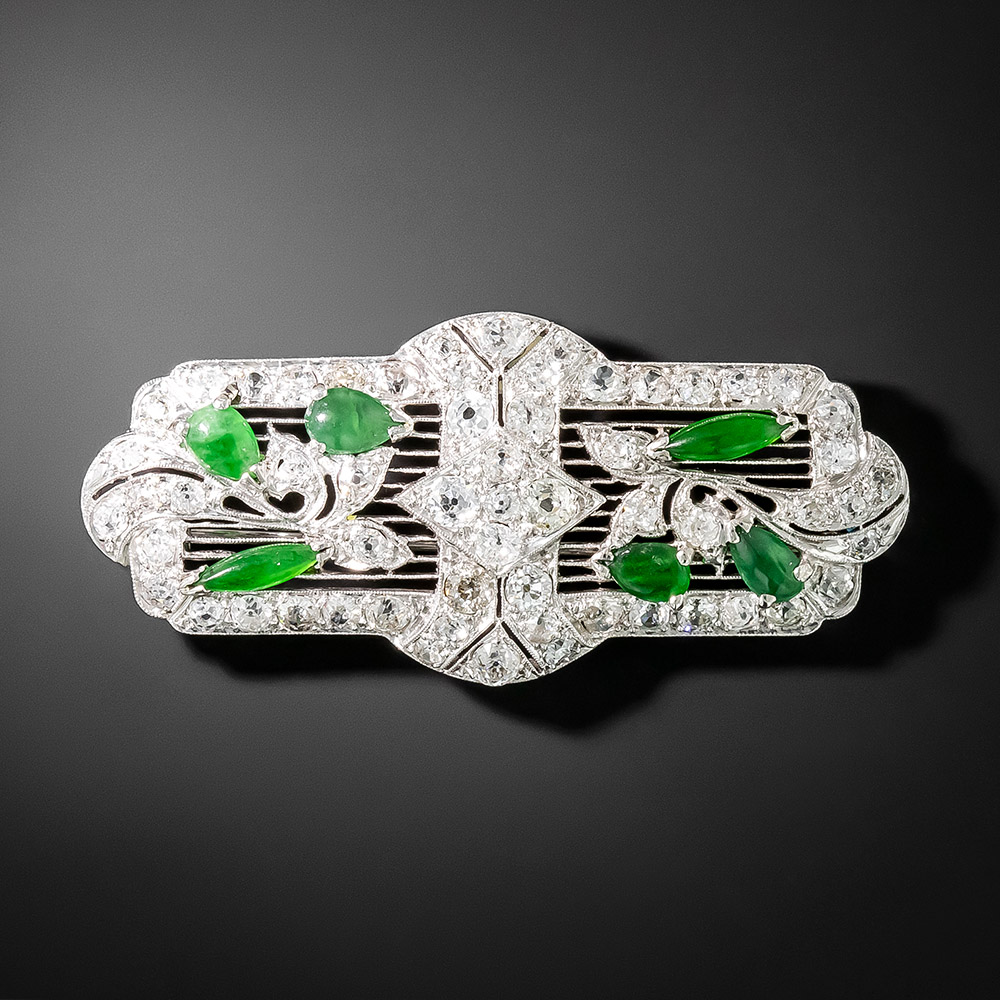
Art Deco Burmese Jade and Diamond Brooch
A marvelous mix of symmetry and asymmetry--along with accents of vibrant color--make this quintessential Art Deco brooch, masterfully hand in platinum, circa 19…
SHOP AT LANG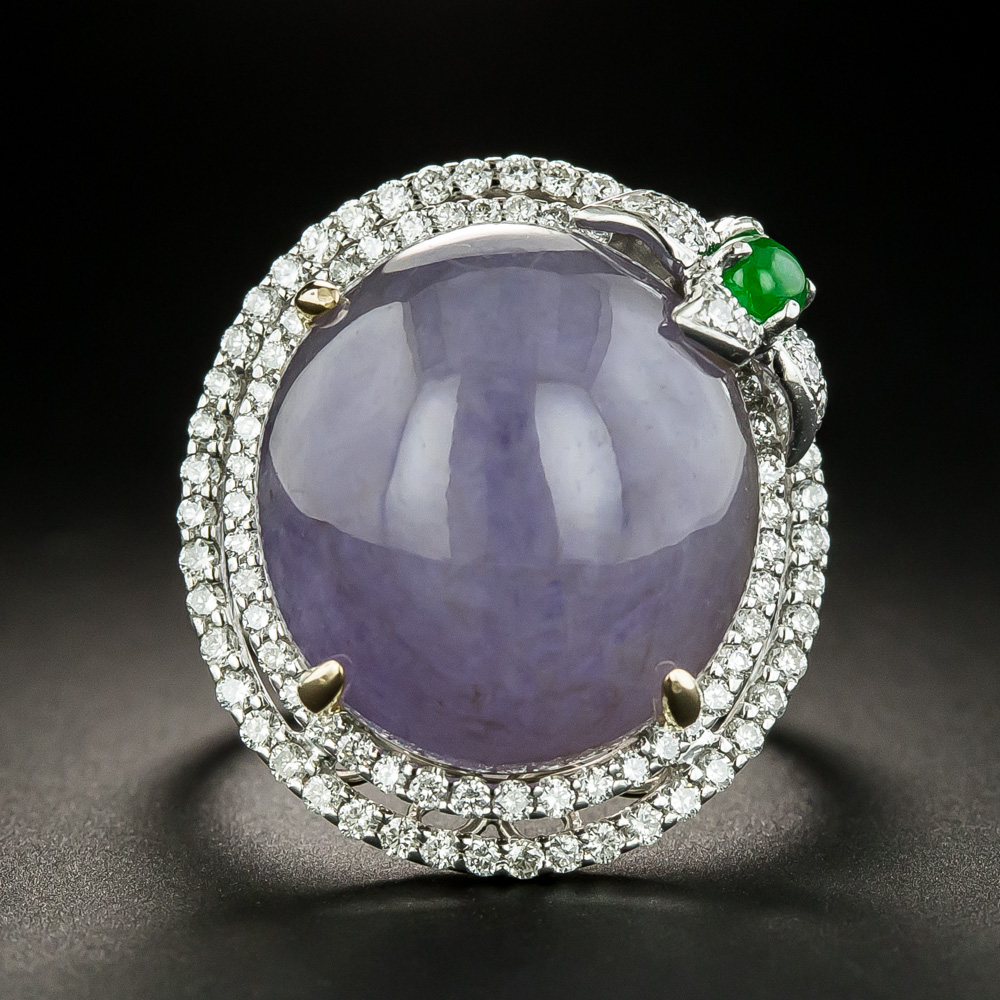
Large Lavender Jade and Diamond Cocktail Ring
A large, high cabochon natural lavender jade, measuring 3/4-inch long and imbued with an unusually deep rich heather purple hue, is artfully enwrapped by glitte…
SHOP AT LANG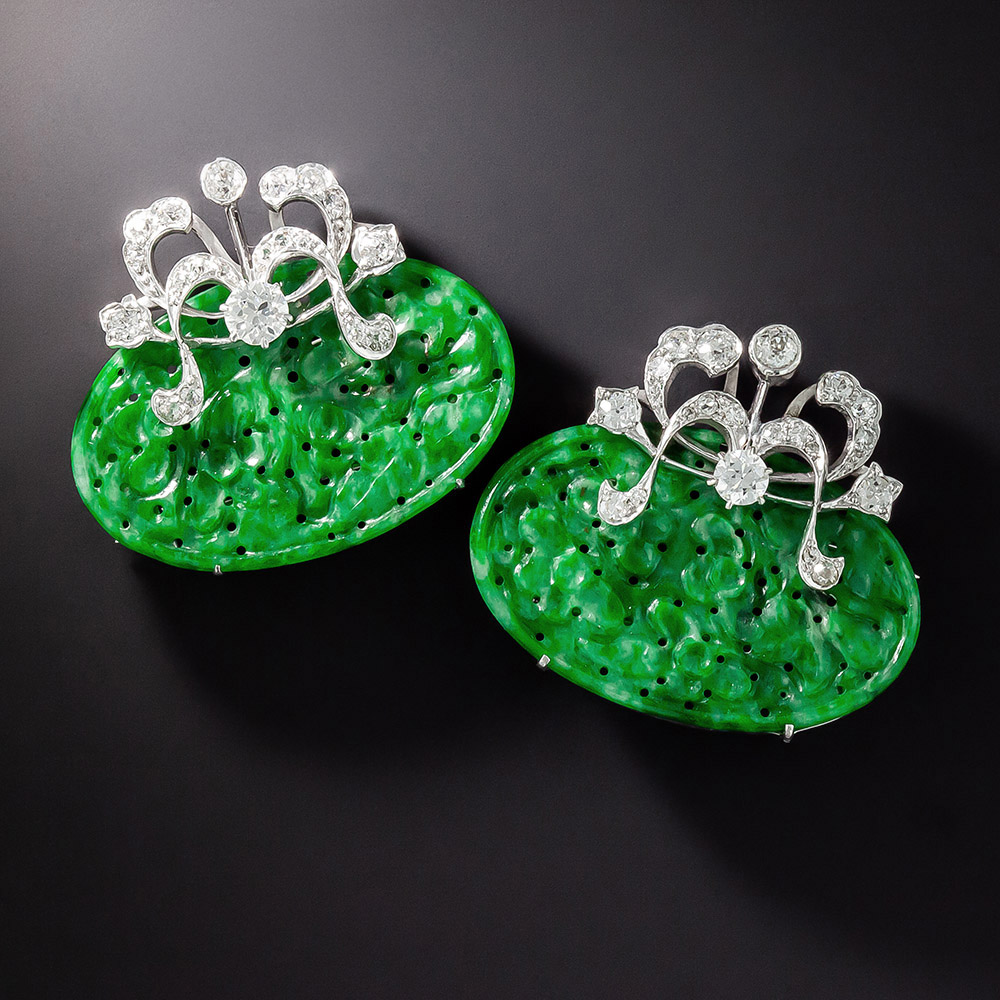
Vintage Carved Jade and Diamond Clips
In these uniquely stunning Art Deco era jewels, a mirror-image pair of rich variegated green oval jade plaques are hand carved with a charming and cheerful flor…
SHOP AT LANG