| Year
| General History
| Discoveries & Jewelry History
|
| Circa
110.000
BC
|
|
- Archaeological finds in Morocco tell us that shell beads were used as decorative objects; the oldest jewelry known to man. They may have served as amulets
|
| Circa
98.000
BC
|
|
- Purposely drilled shells from Israel and Algeria
|
| Circa
73.000
BC
|
|
- Purposely drilled shells from South Africa
|
| Circa
38.000
BC
|
|
- Animal teeth and bone beads found in France
|
| Circa
28.000
BC
|
|
- Fossil shell and ivory beads found in Czech Republic region (East Gravettian culture)
|
| Circa
4400
BC
|
- Badarian culture in Egypt (c. 4500BC to 3250BC). Domestication of animals. Sedentary settlements. Social differentiation by burying prominent people in different areas of cemeteries.
- invention of the wheel (circa 5000BC), presumably first for pottery purposes
|
- The ancient Thracian civilization produces the oldest worked-gold objects. They were discovered at a burial site in Varna, Bulgaria.
|
| Circa
4000
BC
|
- Uruk Period in Sumer (4100BC-2900BC)
|
- Badarian Culture in Egypt starts using alluvial gold and manufactures glazed steatite beads
|
| Circa
3600
BC
|
|
- Naqada culture in Southern Egypt import obsidian from Ethiopia for tools. Jewelry made of gold, lapis, and ivory. The Naqada culture starts using symbols.
- Nephrite jade used for weapons and ornaments in China
|
| Circa
3500
BC
|
- First Cuneiform script in Sumer followed by the Naqada culture starting to use symbols (3300BC) that will evolve into the Egyptian hieroglyphs
|
- Ancient faience found in Nile Valley
|
| Circa
3200
BC
|
- Dynastic period in Egypt; King Meni unifies Upper and Lower Egypt
|
|
| Circa
3000
BC
|
- Dynastic periods in Sumer (2900BC-2334BC), Early Bronze Age in Sumer
|
|
| Circa
2800
BC
|
|
- First known instance of glass production in Syria
|
| Circa
2700
BC
|
|
|
| Circa
2500
BC
|
- Bronze Age on Crete; Minoan civilisation's uprise
- Great pyramid of Gizeh (2560 BC) built
|
|
| Circa
2000
BC
|
|
- Minoan goldsmiths use foilbacked stones in their jewelry
|
| Circa
1895
BC
|
|
- Earliest known examples of granulation from Egypt in jewelry of Khnumet (12th Dyanasty)
|
| Circa
1500
BC
|
|
- Jet is mined in England
- Glass begins to be shaped while molten (previously worked as solid, like stone)
- Art of lost wax casting developed in Near East
- Jadeite in use by the Olmecs of Mexico
|
| Circa
1230
BC
|
|
- Earliest known examples of true cloisonné enamel (Mycenaean)
- Chavín culture in Peru using sheet gold (until 300BC)
|
| Circa
1100
BC
|
- Phoenician sailors establish a trading network throughout the Mediterranian
|
- The ancient Greeks start making intaglios and cameos, the glyptography techniques spread to the east due to Alexander the Great's conquests (4th century BC)
- Iron hand tools – e.g., chisels, saws, awls, hammers, pliers – invented during the early Iron Age
|
| Circa
800
BC
|
- Etruscan civilisation established in modern day Tuscany
|
- Diamonds known in India, exported 300-400 BC
|
| Circa
700
BC
|
|
- Etruscans bury the ashes of their their dead with grave gifts, Fibulas and armillas are amongst them
- Sapphires used by Etruscans
- Earliest use of beaded wire; linked chains forming “straps” found in Nimrud (Iraq)
|
| Circa
600
BC
|
- First electrum coins used in Lydia (Anatolia, Turkey)
|
- Amber used by the Etruscans
|
| Circa
300
BC
|
- Alexander the Great conquest into Asia, the Arabic Peninsula and Egypt (334BC - 323BC)
|
- First documented use of red garnets and emeralds by Greeks
- Greek Theophrastus (c.372-287 BC) compiles oldest surviving mineralogy text
- Fibulas are worn by Romans
- Armillas are given to Roman soldiers as a military decoration
|
| Circa
200
BC
|
|
- Peridot mined on island of Zabargad (Red Sea)
- Tourmaline curvette cameo of Alexander the Great, originating in India, carved 3rd or 2nd C BC
- Clay furnaces and blowpipes used to cast gold, alloy it with silver in Peru and Ecuador
|
| Circa
100
BC
|
|
- Earliest ornamental use of red spinel in Kabul Afghanistan, also used by Romans; blue spinel found in England in Roman period, 51 BC-400 AD
|
| Circa
50BC
|
- Julius Ceasar completes his conquest of Europe to the Rhine (Alesia, 52 v.Chr)
- Octavian (later: Emperor Augustus) conqueres Egypt (Battle of Actium, 30BC)
|
|
| 79AD
|
|
- Pompeii and Herculaneum are buried in ashes and debris, Pliny the Elder dies, being be too close of a witness of the eruption
|
| Circa
100AD
|
|
- Earliest known champlevé enamels, from Sudan
- Cat’s eye chrysoberyl known in Rome, forgotten in the West until end of 19th C
- Venice becomes center for glass-making, exports imitation gems (10AD-1100AD)
- South American Indians in Chocó region mine and work platinum (first 3 centuries AD)
- Diamonds as octahedra (natural crystals) mounted in Roman rings (through 3rd century AD)
|
| Year
| General History
| Discoveries & Innovations
| Jewelry History
|
| Circa
400
|
- Germanic tribes invade the Roman Empire, the Migration period starts
|
|
|
| 529
|
|
|
- Byzantine Emperor Justinian takes up laws regulating the wearing and usage of jewelry in a new set of laws, later to be called the Justinian Code
|
| 548
|
|
|
|
| 570
|
- The prophet Muhammad is born, by the end of his life in 632 a large Islamic state has been established
|
|
|
| Circa
600
|
|
- Earliest evidence of metal drawplate usage in the Western world
|
- King Raedwald of East Anglia receives a burial at Sutton Hoo with extraordinary jewelry by his side.
|
| Circa
800
|
- Charles the Great is crowned Emperor
|
- Mining of red spinel begins in Badakshan, Afghanistan between 750 and 950 AD
- Cloisonné enamel finds its way into the workshops of Byzantine goldsmiths
|
- In choosing a court style Charles picks the Romanesque style after Byzantine exampe
|
| 962
|
|
|
|
| 1096
|
- The first crusade is launched
|
|
- The loot of the first crusade containing incredible amounts of precious stones and gold is transported from the Holy Land to Northern Europe
- A distinct Arabic style emerges in jewelry of the Islamitic world
|
| Circa
1100
|
|
- Chinese originate the concept of pearl culturing (1100-1300?)
|
|
| Circa
1140
|
- The Gothic period in art history starts (lasts until the 16th century)
|
|
|
| 1180
|
|
|
- The goldsmiths of London start a guild
|
| 1234
|
|
|
- Laws regulating the wearing of jewelry are instated in Aragon
|
| 1250
|
|
|
|
| 1284
|
|
|
- The Gothic style starts to influence jewelry
- French laws regulatic the wearing of jewelry are instated (1283)
|
| 1290
|
|
|
|
| 1330
|
|
- Earliest evidence of diamond cutting (the point cut) in Venice
|
|
| 1400
|
|
|
|
| 1433
|
- Charles the Bold, Duke of Burgundy is born (dies 1477). He is believed to have owned the Florentine diamond
|
|
|
| 1450
|
|
- The table cut for diamonds is introduced (c.)
|
|
| 1471
|
|
- The first French cut diamonds are cut during the 15th century
|
|
| 1477
|
|
|
|
| 1496
|
|
- Leonardo da Vinci designs a rolling mill
|
|
| Year
| General History
| Discoveries & Innovations
| Jewelry History
|
| 1720
|
|
- Christopher Pinchbeck develops an alloy of copper and zinc
|
|
| 1722
|
|
|
- The Dresden Green (world’s largest green diamond) first reported in “The London Post Boy”
|
| 1725
|
|
|
|
| 1728
|
|
|
|
| 1730
|
|
|
- Georges Frédéric Strass becomes famous for paste jewelry (c.)
|
| 1735
|
|
- Topaz discovered in Minas Gerais (c.)
|
|
| 1749
|
- Johann Wolfgang von Goethe is born in Germany (dies in 1832)
- Roman Vincent Jeuffroy is born in France (dies in 1826)
|
|
|
| 1753
|
|
|
|
| 1760
|
- George III becomes King of Britain
|
|
- American goldsmith Paul Revere begins making jewelry (c.)
- Lava cameos carved in Italy for tourists visiting Pompeii ruins
|
| 1763
|
|
|
- James Tassie develops vitreous glass paste for 'cameos'
|
| 1764
|
|
|
|
| 1769
|
|
- Die stamping machine patented by John Pickering, adapted for inexpensive jewelry in 1777
|
|
| 1774
|
- Louis XVI becomes king of France
|
|
|
| 1775
|
- American Revolution begins, Congress adopts the Declaration of Independence, 1776
|
|
- Micromosaics first exhibited in Rome
- The Baroque Period ends (c.)
|
| 1777
|
|
|
- “Caesar’s Ruby” (carved rubellite tourmaline) presented to Catherine the Great of Russia
- Azim-ud-Daula, the Nawab of Arcot presents Queen Charlotte of Britain a gift: five diamonds of which two are the Arcots
|
| 1780
|
|
- Burmese jadeite imported into China
|
|
| 1781
|
|
|
- William Asprey establishes Asprey
|
| 1782
|
|
- French scientist Antoine Laurent Lavoisier succeeds in melting platinum from it's ore using pure oxygen
|
|
| 1783
|
|
- Spinel first recognized as a distinct mineral
|
|
| 1784
|
|
|
|
| 1785
|
|
|
|
| 1786
|
|
|
- Marc Étienne Janety, goldsmith to Louis XVI of France, crafts a sugar bowl out of platinum
|
| 1787
|
|
|
|
| 1789
|
- French Revolution begins, ends 1799
- George Washington, elected first President of the USA. He dies in 1799.
|
- Chrysoberyl identified as mineral species by German geologist A. G. Werner
- Brazilian chrysoberyls in Portuguese jewelry, last ½ 18th C
|
|
| 1791
|
|
- Titanium discovered by British clergyman Wm. Gregor, isolated 1910
|
|
| 1793
|
|
|
- Seril Dodge of Providence, RI, advertises offering of jewelry items made to order, sells business to half-brother Nehemiah. 1796
|
| 1795
|
|
|
- Diamonds begin to be set 'à jour' (c.)
|
| 1799
|
- Napoleonic Wars. They end in 1815
|
- Amethysts discovered in the Ural Mountains in Russia
|
|
| 1800
|
- Thomas Jefferson elected President of the USA
- Jem Belcher wins his national boxing title
|
- Alessandro Volta invents the first battery, the Volta Pile
- Wollaston & Smithson Tennant begin collaboration, create commercial grade platinum, they discover platinum family of metals: palladium and rhodium in 1802; iridium and osmium, 1803
|
|
| 1801
|
|
- Robert Hare of Philadelphia invents oxyhydrogen ('gas') blowpipe
- Recognition of tourmaline “family”
- Niobium discovered by British chemist Charles Hatchett
|
- E. Hinsdale establishes first American factory for the manufacture of fine jewelry in Newark, NJ
|
| 1804
|
- Napoleon crowns himself Emperor of France
|
|
|
| 1811
|
|
|
|
| 1812
|
- 1812-1815 War between Great Britain and the USA
|
|
|
| 1813
|
- 1813-1815 Prussian War of Liberation against Napoleon
|
|
- Berlin iron jewelry made in Germany as patriotic gesture during War of Liberation: "ich gab gold für Eisen" (I gave gold for iron)
|
| 1815
|
|
|
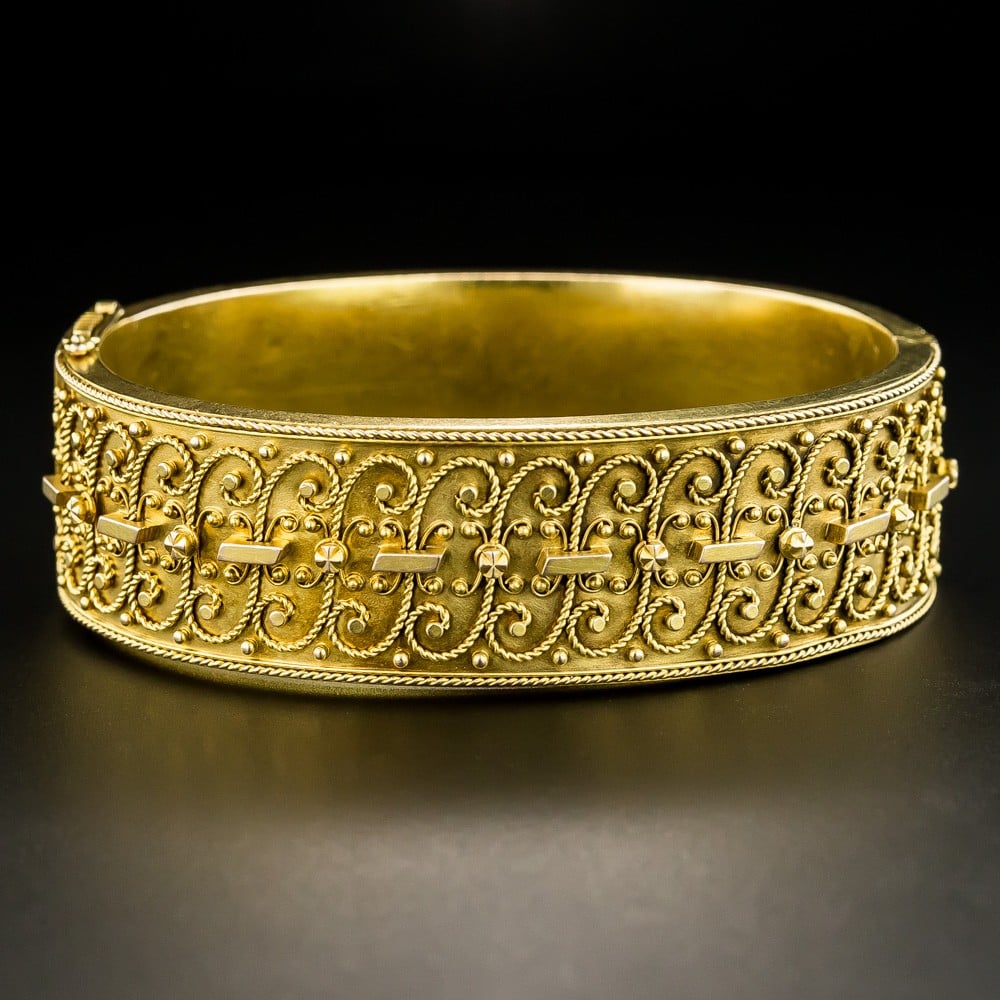
- Fortunato Pio Castellani established workshop in Rome, begins study of granulation in ancient gold work in 1827
|
| 1819
|
|
|
|
| 1820
|
- George III of Great Britain dies, George IV becomes king
|
- Platinum discovered in Russian Ural mountains
- Ancient gold work discovered in Etruscan excavations
- Tourmalines discovered in Maine, mines opened from 1822 (c.)
|
|
| 1824
|
- Charles X becomes king of France
|
- Pin making machine for straight pins patented in England by L.W. Wright, by J. Howe in the USA in 1832
|
|
| 1829
|
- Andrew Jackson elected President of the USA
|
|
|
| 1830
|
- Louis-Philippe I becomes king of France
- George IV of Great Britain dies, William IV becomes king
- Alexandrite discovered in Ural Mountains in an emerald mine, named after Czar Alexander II
|
|
|
| 1832
|
|
|
|
| 1836
|
|
- Edmund Davey discovers and identifies acetylene
- USA Patent Act passed. U.S. Patent office issues Patent Number 1
|
|
| Year
| General History
| Discoveries & Innovations
| Jewelry History
|
| 1837
|
- Victoria becomes Queen of Great Britain
|
- Louis J.M. Daguerre perfects daguerreotype photographic process
- The telegraph is patented by Cooke and Wheatstone, improved by Samuel Morse, first message sent 1844
|
- Enameled garter armlet made for Queen Victoria; Order of the Garter strap and buckle motifs become popular
- Charles Lewis Tiffany founds company in New York City; becomes Tiffany & Co. in 1853
- Falize opens up shop in Paris
|
| 1839
|
|
|
|
| 1840
|
|
- Electroplating commercialized, patented by Elkingtons of Birmingham. Large scale jewelry manufacturing begins in the USA
- Process for permanently foiled pastes discovered
- Steam power first used for diamond cutting in Amsterdam
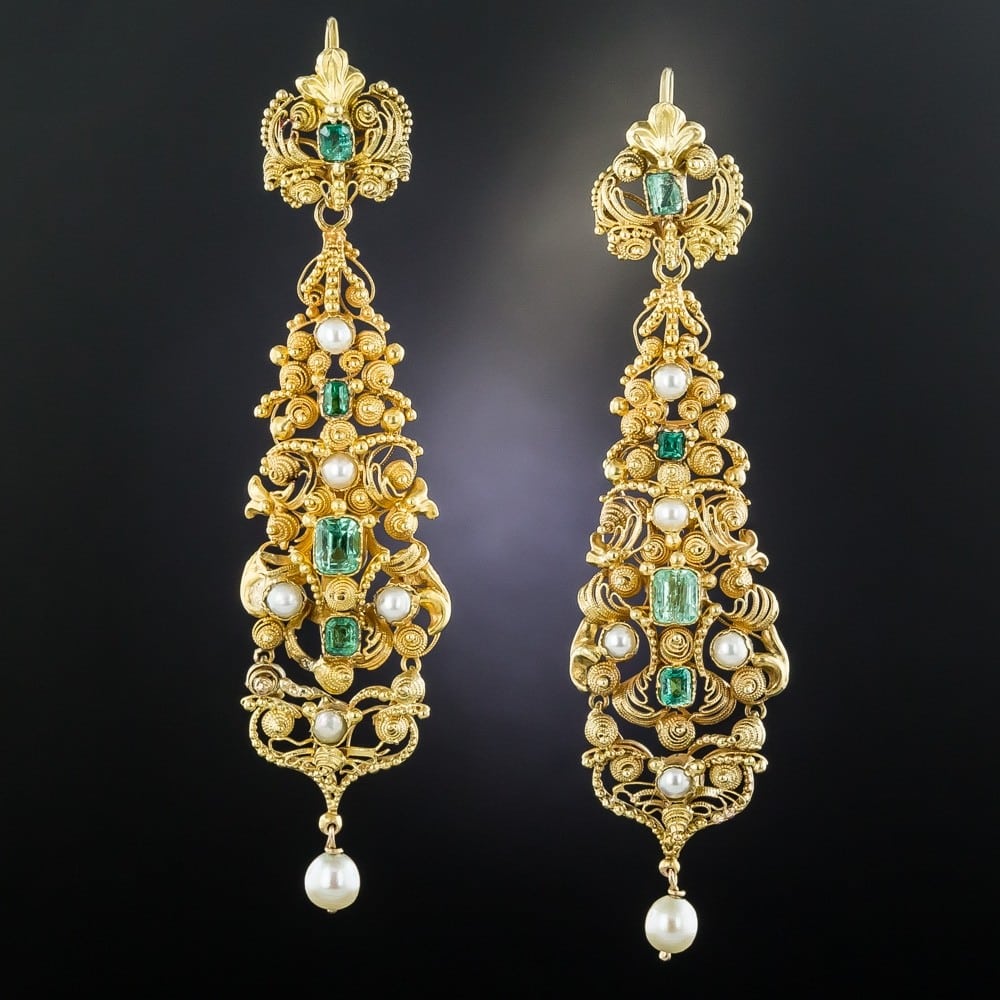
- Repoussé and machine stamping replace cannetille (c.)
|
- Scottish motifs in 'pebble' (agate) jewelry popularized, continuing through the rest of the century
- Algerian knot motif introduced in Paris
|
| 1841
|
|
|
- Duty on imported jewelry and mounted gemstones levied by USA
|
| 1842
|
|
- Gutta-percha introduced in Paris
- Excavations of ancient Assyrian capital of Nineveh begin
|
|
| 1843
|
|
|
- Garrard becomes British Crown Jeweler
|
| 1846
|
|
|
- Riker, Tay & Searing founded in Newark, NJ, become Riker Bros. in 1892
|
| 1847
|
|
|
|
| 1848
|
|
- Gold discovered in California
- Thomas H Lowe of Birmingham introduces rolled gold plating process (a.k.a. gold filled) to Providence, RI, manufacturers
|
|
| 1849
|
|
- The safety pin invented and patented by W. Hunt
- Gold electroplating patented
- Opals first discovered in Australia, the first with play of color in 1863
|
|
| 1850
|
- High tariff placed on foreign goods imported into the USA
|
- Tube shaped ('trombone') safety catch patented by Charles Rowley of Birmingham, England
|
- Brooches with swiveling compartments introduced (c.)
- Garnet-glass doublets first introduced (c.)
|
| 1851
|
- First international exhibition, the Great Exhibition of the Works of Industry of All Nations, held at the Crystal palace in London
|
|
|
| 1852
|
- Louis Napoleon becomes Napoleon III, beginning of the French Second Empire
|
- Machine for heat-pressing bog oak patented
|
- Tiffany & Co. introduces the English sterling standard to the USA
|
| 1853
|
- Commodore Matthew Perry sails the American fleet into Japan; opens East-West trade relations
- Crystal Palace exhibition held in New York, modeled after London Exhibition
|
|
|
| 1854
|
|
- Results of first commercially successful aluminum reduction process published by Henri Ste. Claire Deville
- Samuel Peck’s patent for shellac composition daguerreotype cases
|
- Use of 15-, 12-, and 9-karat gold made legal in England
|
| 1855
|
- Paris Exposition Universelle, aluminum articles first exhibited
|
- R.W. Bunsen begins using gas-air burner that is his namesake
- Patents for Bois durci, Parkesine and artificial coral issued
|
- Theodor Fahrner founds jewelry factory in Pforzheim, Germany
- First aluminum jewelry made in France (c.)
|
| 1856
|
|
- Wm. Perkin accidentally discovers the first synthetic aniline (coal-tar) dye, mauve
|
|
| 1857
|
- Financial 'Panic of 1857' affects all of U.S. industries
|
- Furnace to melt platinum and it's alloys developed by Henri Ste. Clair Deville
- Snake chain making machine patented in the USA
|
|
| 1858
|
- First attempted laying of a transatlantic cable
|
|
|
| 1859
|
- Construction of the Suez Canal begins
|
- Comstock Lode silver discovered in Nevada
- Jewels of Queen Ah-Hotep of Egypt discovered
|
- First attempt at organized jewelers' union in USA, not successful until 1900 (International Jewelry Workers Union of America)
|
| 1860
|
|
- English patent for machine to manufacture stamped settings (collets) for stones granted to Frenchmen Bouret and Ferré
|
|
| Year
| General History
| Discoveries & Innovations
| Jewelry History
|
| 1861
|
|
|
- Fortunato Pio Castellani turns business over to son Augusto
- Wearing of (black) mourning jewelry required at British court until circa 1880
|
| 1862
|
- International Exhibition held in London
|
- Japanese decorative arts exhibited for the first time in the West
|
|
| 1863
|
- Edward, Prince of Wales, marries Alexandra of Denmark
|
|
|
| 1865
|
|
|
|
| 1866
|
|
|
|
| 1867
|
- Paris International Exhibition
|
- First authenticated diamond, the 'Eureka', discovered in South Africa
|
- Egyptian Revival jewelry exhibited at Paris Exposition, John Brogden wins gold medal for his jewelry
|
| 1868
|
|
- Celluloid, the first successful semi-synthetic thermoplastic, invented in USA by John Wesley Hyatt; commercial production begins in 1873
|
- Gorham Mfg. Co., Providence, RI, adopts sterling standard of 925 parts per thousand
|
| 1869
|
- First transcontinental railroad from Omaha to San Francisco
- Suez Canal opened
|
- Diamond Rush begins in South Africa with the discovery of the Star of Africa
|
- Henry D. Morse cuts the Dewey diamond, largest found in America to date (23,75ct, cut to 11,70 ct)
- American Horological Journal first published, merges with The Jewelers' Circular to become The Jewelers' Circular and Horological Review
|
| 1870
|
- Fall of the French Empire
- Start of a recession in Europe that lasts throughout the decade
|
- Diamonds discovered in Kimberley, South Africa
- Japanese craftsmen introduce metal-working techniques and designs to the West
|
- Influx of European craftsmen and designers into the USA
- Peter Carl Fabergé takes over father's business
- Jewelers' Circular founded, first issue published February 15
|
| 1872
|
- International Exhibition held in London
|
- Black opals discovered in Queensland, Australia
- Ferdinand J Herpers of Newark, NJ, patents six prong setting for diamond, introduced as the Tiffany setting by Tiffany & Co. in 1886
|
- Celluloid commercial production begins; trade name registered, 1873
|
| 1873
|
- Universal Exhibition held in Vienna
|
- Henry D. Morse and Charles M. Field obtain British and U.S. (1874, 1876) patents for steam-driven bruting (diamond cutting) machines
|
|
| 1874
|
Deadwood, Dakota
|
- Gold discovered in Black Hills of Dakota Territory
- Patents for artificial coral, tortoiseshell, amber, jet (celluloid)
|
|
| 1875
|
|
|
- Arthur Lazenby Liberty founds Liberty & Co. of London
- The Celluloid Mfg. Co. begins jewelry production in Newark, NJ
|
| 1876
|
- Centennial Exposition held in Philadelphia
- Wearing of swords banned in Japan
- Queen Victoria becomes Empress of India
|
- Alexander Graham Bell patents the telephone
|
- Alessandro Castellani presents and lectures on Etruscan revival jewelry at Centennial Exposition
|
| 1877
|
|
- Advent of bottled oxygen (liquefied and compressed)
- Successful experiments with chemical manufacture of very small rubies and sapphires in Paris, published by Frémy
|
- Aucoc buys Parisian firm 'Lobjois' and changes it's name to 'La Maison Aucoc'
|
| 1878
|
- Paris exposition Universelle
|
- Patent for platinum-tipped prongs for setting diamonds
- earring covers for diamond earrings patented
- Tiffany diamond discovered in South Africa
|
- Tiffany & Co. awarded gold medal for encrusted metals technique in the Japanesque style at Paris Exhibition
- Unger Bros. of Newark, NJ, begins the manufacture of silver jewelry
|
| 1879
|
|
- T.A. Edison patents incandescent light bulb
- Hiddenite, green variety of spodumene, found in North Carolina, USA
|
|
|
| 1880
|
- Rational Dress Society founded in Great Britain
|
|
- Cecil Rhodes establishes De Beers Mining Company in South Africa (renamed De Beers Consolidated Mines in 1888)
- Mass production of wrist watches begins in Switzerland, introduced in the USA in 1895. Manufacture starts around 1907.
- Child & Child is established in London
|
| 1881
|
- First electrically lit theatre, The Savoy, opens in London
|
|
|
| 1882
|
|
- Blue sapphires discovered in Kashmir, N. India
|
|
| 1883
|
- Metropolitan Opera House opens in New York City
|
|
|
| 1884
|
|
|
- Sotirios Bulgari opens up shop in Rome, Italy
|
| Year
| General History
| Discoveries & Innovations
| Jewelry History
|
| 1885
|
|
|
|
| 1886
|
- Statue of Liberty dedicated
|
|
- Tiffany setting for diamond solitaires introduced
- Richard W. Sears starts a mail order company to sell watches (second company to sell jewelry and watches founded in 1889)
|
| 1887
|
|
- Hall-Héroult process for refining aluminum developed; first commercial production in Switzerland, value drops
- Celluloid photographic film invented by Hannibal W. Goodwin
- Gold extraction by cyanide process Invented by John Stewart, Macarthur and the Forrest brothers
- Black opals discovered in NSW, Australia; commercial mining at Lightening Ridge begins in 1903
- The Belais brothers of New York begin experimenting with alloys for white gold (c.). David Belais introduces his formula to the trade in 1917 (18k Belais)
|
- Tiffany & Co. purchases the French crown jewels
- Birmingham (England) Jewellers' and Silversmiths' Association formed by manufacturers
|
| 1888
|
|
- George Eastman introduces the first commercial box camera, the Kodak
|
- C.R. Ashbee's guild of Handicraft founded in London, the first crafts guild to specialize on jewelry making and metalwork
|
| 1889
|
- Paris Exposition Universelle - Eiffel Tower constructed
|
- Sapphire's found in Dry Cottenwood Creek, Montana
|
|
| 1890
|
- Gibson’s Gibson Girl appears in humor magazine Life
|
|
|
| 1891
|
- The marking of foreign imports with the name of the country of origin in English required by the enactment of the McKinley Tariff Act, October, 1890
- Patent for artificial horn (celluloid)
|
- Frémy publishes experiments with ruby synthesis, drawings of
synthetic-set jewelry
- Power driven bruting (girdling) machine for cutting diamonds patented in England
- First commercial opal mine opened in Australia
|
|
| 1892
|
|
|
- Vogue magazine founded in the USA
- Marcus & Co. formerly Jaques & Marcus, established in New York
|
| 1893
|
- World's Colombian Exposition in Chicago
|
- Cultured pearls first developed by K. Mikimoto in Japan; first spherical pearls grown 1905
- 'Platingeld' introduced, used for simulated gold and platinum chains
- Excelsior diamond is found in South Africa
|
|
| 1894
|
- Thomas Edison's Kinetoscope Parlor ('peepshow') opens in New York City
|
- Screw back earring finding for unpierced ears patented
- Cross & Bevean, UK, issued patent for cellulose acetate
|
|
| 1895
|
- American Consuelo Vanderbilt marries the British Duke of Marlborough
|
- Blue sapphires discovered in Yogo Gulch, Montana
- Bonzano Creek Gold Rush in Klondike, Yukon, Canada
- The wireless telegraph invented by Guglielmo Marconi (first transatlantic wireless signal in 1901)
|
- Sigfried (aka Samuel) Bing opens his new Paris gallery of decorative art called L'Art Nouveau
- René Lalique exhibits jewelry at the Bing gallery and the Salon of the Societé des Artistes Français; begins work on a series of 145 pieces for Calouste Gulbenkian
- Daniel Swarowski opens Glass stone-cutting factory in Tirol, Austria
|
| 1897
|
|
- Casein plastics marketed in Germany
|
|
| 1898
|
|
- Alaska Gold Rush
- Commercial sapphire mining begins in Rock Creek, Montana
- Commercial tourmaline mining begins in San Diego County CA
|
|
| 1899
|
- Boer war in South Africa starts, lasts until 1902
|
|
- Diamond supplies curtailed by the Boer war, prices for De Beers' reserve stock rise
- Aigrettes reach the peak of their popularity (c.)
|
| Year
| General History
| Discoveries & Innovations
| Jewelry History
|
| 1900
|
|
- Oxyacetylene torch invented by Edmund Fouché
- The diamond saw is invented by a Belgian working in the USA. (c.)
- Synthetic rubies exhibited at Paris Exposition
|
|
| 1901
|
- Queen Victoria dies, Edward VII becomes King
- McKinley assassinated. Theodore Roosevelt becomes President
- Pan American Exposition held in Buffalo NY
|
- Lever safety catch for brooches patented by Herpers Brothers of Newark
|
- Gustav Stickley begins publishing his periodical, The Craftsman (until 1916)
- Tiffany & Co. exhibits at Pan-American Exposition, special hallmark (beaver) used on exhibition pieces
|
| 1902
|
- Vienna Secession Exhibit
- Edward VII coronation
|
|
|
| 1903
|
|
- Black opals commercially mined at Lightning Ridge, NSW, Australia
|
- Wiener Werkstätte founded in Vienna, Austria by Koloman Moser and Josef Hoffman
- Fabergé opens London branch, selling mostly 'gentleman's rings'
|
| 1904
|
- Louisiana Purchase Exposition held in St. Louis
- New York City subway opens
- Construction on the Panama Canal begins
|
|
|
| 1905
|
- Albert Einstein proposes his theory of relativity
|
- First spherical pearls grown in Japan by Mikimoto
- Cullinan diamond discovered in South Africa, presented to Edward VII on 1907
|
- Forest Craft Guild founded by Forest Mann in Grand rapids, MI, USA
- The Kalo Shop begins jewelry making in Chicago
- Henri Matisse and other fauvist artists exhibit at Salon d'Automne in Paris
|
| 1906
|
- San Francisco earthquake and fire
- Finland is the first country to grant women's suffrage
|
|
- National Stamping Act passed in the USA, requiring marking of gold and silver content
- Van Cleef & Arpels founded in Paris
|
| 1907
|
- Suffragettes demonstrate for the right to vote in London
|
- Benitoite discovered in California, declared official state stone in 1985
- Blue Verneuil sapphire becomes available
|
- First exhibition of cubist paintings held in Paris, including works by Pablo Picasso and Georges Braque
- Tiffany & Co. establishes Art Jewelry Dept. with Louis Comfort Tiffany as director
|
| 1908
|
|
- First spherical cultured pearls patented by Mikimoto (first grown in 1905, American patent granted in 1916)
- Synthetic spinel accidentally produced by flame fusion process
- Henry Ford introduces the first mass-produced automobile, the Model T
|
- Couturier Paul Poiret opens 'Boutique Chichi', introduces corset less dresses and the vertical line in fashion (c.)
- A British gemology course is the result of the annual meeting of the National Association of Goldsmiths of Great Britain and Ireland. First course: 1912, first diploma 1913
|
| 1909
|
- Copyright symbol © introduced for printed works
|
- Leo H. Baekeland patents first entirely synthesized plastic, Bakelite
- The Wright brothers begin large scale manufacture of the airplane (first flight 1903, patented in 1906
- Synthetic color change corundum first created
|
|
| 1910
|
- Edward VII dies, George V becomes king of Great Britain
- First major American women's suffrage parade held in New York City, demonstration in Washington DC in 1913
|
- Eugene Morehouse invents the 'bullet' safety catch for brooches, patented for B.A. Ballou & Co. in 1911
|
- France classifies platinum as a precious metal, new hallmark (dog's head) issued in 1912
- Suffragette jewelry in green, white and violet (first initials for 'give women votes') is popular in Britain and the USA
|
| 1911
|
|
- Synthetic blue sapphires are patented in the USA by Verneuil
|
- The Hope Diamond is purchased by Ned and Evalyn Walsh McLean
- George V has Cullinan I and II set in Imperial State crown and scepters
|
| 1912
|
|
|
|
| 1914
|
- World War I begins
- First ship though Panama Canal, completed in 1913
|
|
- The first U.S. fashion show is staged by Edna Wollman Chase, editor of Vogue
- Platinum is declared a 'strategic metal' during wartime, use in jewelry diminished
|
| 1915
|
- Panama-Pacific Exposition held in San Francisco
- Panama-California Exposition held in San Diego
|
|
|
| 1917
|
- The USA enters the War
- The Russian Revolution begins
|
|
- David Belais of New York introduces his formula for 18k white gold to the trade, known as 18k Belais
- Cartier designs the Tank wristwatch, first public sale 1919
|
| 1918
|
- World War I ends
- Bohemia, Moravia and Slovakia become the Republic of Czechoslovakia
- First regular airmail service, between Washington DC and New York City begins, New York to San Francisco in 1921
|
- Polish chemist J. Czochralski’s “pulling” method for gemstone synthesis is published
|
|
| Year
| General History
| Discoveries & Innovations
| Jewelry History
|
| 1919
|
|
Ideal cut
|
- Marcel Tolkowsky publishes Diamond Design, detailing the cut and proportions of the modern brilliant ('American' or 'Ideal' Cut), following scientific standards first discovered and developed by Henry D. Morse
- Buccellati established in Italy
|
| 1920
|
- The Nineteenth Amendment, giving women the right to vote, is ratified
- First regular radio programs begin broadcasting in Pittsburgh
|
|
|
| 1922
|
|
- Howard Carter discovers King Tutankhamen's tomb in Egypt
|
- Raymond C. Yard, Inc. founded in New York City
|
| 1923
|
|
- Synthetic pearl essence for simulated pearls invented, called H-scale
|
|
| 1924
|
|
- Egyptologist Caroline R Williams discovers the granulation technique used by ancient goldsmiths
|
|
| 1925
|
- Exposition Internationale des Arts Decoratifs et Industriels Modernes is held in Paris
|
- Synthetic spinel, inadvertently produced by flame fusion process in 1908, now in worldwide use
|
- Jensen is awarded the Grand Prize at the Paris exposition
- Firm of Trifari, Krussman & Fishel established
|
| 1926
|
|
- The first injection molding machine patented by Eckert and Ziegler in Germany
|
|
| 1927
|
- Charles Lindbergh flies solo nonstop New York to Paris
- Motion picture with sound first publicly shown (Al Jolson in 'the Jazz Singer')
|
- Cellulose acetate, trade name Lumarith, introduced by Celluloid Corp.
- Cartier patents spring system for double clip brooch
|
|
| 1928
|
|
|
- Schiaparelli establishes 'maison Schiaparelli' in Paris
- Paul Flato opens salon in New York
|
| 1929
|
- The Great Depression begins with stock market crash
|
|
|
| 1930
|
- Chrysler Building completed in NYC
|
|
- Ernest Oppenheimer becomes chairman of De Beers, creates Diamond Corporation
- Formation of Union des Artistes Modernes, Paris
|
| 1931
|
- Empire State building becomes New York's tallest
|
- The 'Duette' pin back mechanism for double clip brooches patented by U.S. costume jewelry manufacturer Coro
|
- William Spratling opens the first silver workshop in Taxco, Mexico
- Robert M. Shipley founds the GIA
|
| 1932
|
- Franklin D. Roosevelt elected President of the USA
|
|
- 14k gold replaces 12k and 15k in Britain, by decision of the Worshipful Company of Goldsmiths, London
- Harry Winston opens a retail jewelry business in New York City
|
| 1933
|
- Construction begins on Golden Gate Bridge in San Francisco (completed in 1937)
- Prohibition repealed
- Gold taken out of circulation
- Century of Progress World Fair opens in Chicago
|
|
- Lost wax process, used in dentistry since c. 1910 reintroduced for mass production of jewelry castings with vulcanized rubber models (c.)
- Diamond Producers Association formed, Diamond Trading Co. created
|
| 1934
|
- Salvador Dali exhibits surrealist paintings in New York City
|
- Synthetic emeralds (Igmerald) developed by IG-Farben, Germany, first seen by gemologists
- Patent for the clip back earring finding for unpierced ears granted to Eugene Morehouse for B.A. Ballou
|
- Ernest Oppenheimer creates the De Beers Consolidates Mines Ltd. diamond cartel
- Van Cleef & Arpels introduces the "Ludo flexible strap bracelet
|
| 1935
|
- French luxury cruise ship Normandie arrives in New York
- U.S. Works Progress Administration inaugurated
|
|
- D. Lisner & Co. introduces 'Bois Glacé' jewelry, their trade name for colorless phenolic plastic (Bakelite) laminated to wood
- The Jewelers' Circular merges with The Keystone to become Jewelers' Circular-Keystone
|
| 1936
|
- George V dies, succeeded by George VI
- BBC inaugurates television service; general broadcasting begins in U.S. in 1941
- Life Magazine founded by Henry Robinson Luce
|
|
|
| 1937
|
- The International Exhibition of Arts and Techniques in Modern Life held in Paris
- First feature-length animated film, Walt Disney's 'Snow White and the Seven Dwarfs'
|
- Du Pont de Nemours & Co. introduces acrylic plastic, trade name 'Lucite'; also patents nylon fiber
- Double pronged hinged (dress) clip introduced (c.)
|
- Van Cleef and Arpels makes 'marriage contract' bracelet for Wallis Simpson, the Duchess of Windsor
- Boucheron, Cartier, Mauboussin, Van Cleef & Arpels and others display figural jewels of colored gold and gemstones at Paris exposition
- Paul Flato opens his Los Angeles establishment
|
| 1939
|
- World War II begins in Europe
- The New York World's Fair, titled 'The World Of Tomorrow' opens
- Gone With The Wind premiers
|
|
- First commercially successful synthetic emerald process marketed by Carroll Chatham of San Francisco, CA (the term 'Chatham Created Emerald' first used in 1963)
- The House of Jewels at the New York World´s fair is sponsored by Tiffany & Co., Black, Starr & Frost-Gorham, Udall & Ballou, Marcus & Co. and Cartier New York
- Van Cleef & Arpels opens an office in New York
- Verdura opens his shop in New York
- Sam Kramer opens his shop in Greenwich Village
|
| 1940
|
- France falls under German occupation
|
- Hydrothermal synthetic quartz produced by AT&T Bell labs, USA
|
- The Bank of France bans all gold trading
- The Greek Lalaounis, at age 20, becomes an apprantice at Zolotas in Athens
|
| 1941
|
- The USA enters the War with the Japanese bombing of Pearl harbor
- First U.S. television broadcasting begins
|
|
- 10% luxury tax on jewelry in USA raised to 20% in 1944
- Jean Schlumberger opens shop in New York, Joins Tiffany & Co. in 1956
- Craft Horizons, the first national magazine for crafts in the USA is published by the Handicraft Cooperative League
|
| 1942
|
- Rationing of consumer products (sugar, coffee, gasoline) begins in the U.S.
|
- Polyethylene formulated by Earl S. Tupper and DuPont, Tupperware introduced in 1946
|
- Use of platinum for jewelry prohibited in USA
- White metal restricted by U.S. Government, sterling silver used as substitute in costume jewelry
|
| 1943
|
- Postal zones added to addresses of large cities in USA
|
|
- Luxury tax on jewelry raised to 20% in the USA
|
| 1944
|
|
|
|
| 1945
|
- World War II ends
- Roosevelt dies, Harry Truman becomes President of the USA
- United Nations is formed, holds first session in 1946
|
|
- Suzanne Belperron forms partnership Herz-Belperron with Jean Herz in Paris
- Mexican government requires marking of sterling silver with 'spread eagle' assay mark
|
| 1946
|
|
|
- First National exhibit of American studio artists' jewelry held at Museum of Modern Art in New York City
- Jerry Fels founds 'Renoir of Hollywood' in Los Angeles, CA
- David Webb opens office in New York, salon in 1963
|
| 1947
|
- Couturier Christian Dior introduces 'The New Look'
- Copyright laws re-enacted by U.S. Congress, expanded to include illustrations of merchandise and designs for art works
|
- Synthetic star corundum becomes available, production by Linde from the USA
- Synthetic Rutile introduced as a diamond simulant
|
- Synthetic star rubies and sapphires (Linde) first marketed
- Costume jewelry manufacturers begin abandoning design patents in favor of copyrights, using the © as part of a maker's mark
- Metalsmithing workshops series for war veterans begins, ends in 1951
|
| 1948
|
- Jewish State of Israel declared, admitted to U.N. in 1949
- Truman elected to full term as President of the USA
|
|
- De Beers Diamond Corp. launches the slogan 'a diamond is forever'
|
| 1949
|
- German Federal Republic (West Germany) proclaimed
- Israel admitted to UN
|
|
- Harry Winston purchases the Hope diamond. his 'Court of Jewels' exhibit opens in New York, it tours the USA for the next four years
- Marshall Field closes craft shop for jewelry & metalware
|
| 1950
|
|
|
|
| 1951
|
- Color television introduced in the USA
|
|
- The Metal Arts Guild organized in San Francisco
|
| 1952
|
- George VI of Britain dies; succeeded by Elizabeth II
- Dwight D. Eisenhower elected President of the USA
|
- Strontium Titanite is introduced as a diamond simulant
|
- Italian Jewelers Buccellati establishes a salon in New York City
|
| 1953
|
- Marilyn Monroe sings 'Diamonds Are a Girl's Best Friend' in 'gentlemen Prefer Blondes'
|
|
- Mamie Eisenhower wears Trifari faux pearls to inaugural blall
|
| 1954
|
|
|
- De Beers institutes the Annual Diamond International Awards for original designs in diamond-set jewelry
- First successful production of synthetic diamonds at General Electric, process patented in 1960, large gem-quality crystals produced in 1970
|
| 1955
|
- Atomically generated power first used in the USA
|
|
- Swarovski Corp introduces the 'Aurelia borealis' color effect for rhinestone and crystal in collaboration with Cristian Dior
- Strontium titanite introduced to the public as a diamond simulant
|
| 1956
|
|
|
- Julius Cohen opens up his jewelry salon
- Jean Schlumberger joins Tiffany
|
| 1957
|
- USSR launches first 'Sputnik' satellite on Oct. 4
|
|
|
| 1958
|
- Universal Exhibition opens in Brussels, Belgium
|
- Chatham introduces Flux Melt synthetic Ruby
|
|
| 1960
|
- John F. Kennedy elected President of the USA
- Birth control pills introduced to the public
|
- Opal triplets first made (c.)
- Process for synthetic diamonds patented in the USA
- Synthetic overgrowth of emerald on goshenite succesfull: Leichleitner emeralds enter the market in small numbers
|
|
| 1961
|
- Both the Soviets and the USA put the first men in space
|
|
- International Exhibition of Modern Jewelry (1890-1961) held in London
- U.S. National Stamping Act amended, requiring a maker's trade mark
|
| 1962
|
|
|
- Laurence Graff opens up his first shop in Hatton Garden, London
|
| 1963
|
- Kennedy assassinated. Lyndon Johnson becomes President
- U.S. Post Office introduces the ZIP code
|
|
|
| 1964
|
|
- Commercial production of Gilson Flux melt Emeralds starts
|
|
| 1965
|
|
- Hydrothermal emeralds become commercially available. Production by Flanigen/Quintesse/Linde from the USA
|
|
| 1966
|
|
|
|
| 1967
|
|
|
|
| 1968
|
|
- YAG becomes commercially available
|
|
| 1969
|
- U.S. moon landing
- Woodstock Music festival
|
|
|
| 1972
|
|
- Cubic Zirconia 'skull melt process patented, CZs commerciallt marketed in 1976
- Gilson produces synthetic opal and synthetic turquoise
|
- The term Retro is introduced (c.)
|
| 1973
|
|
- Synthetic alexandrite first marketed by Creative Crystals from the USA
|
|
| 1974
|
- Nixon resignsas a result of Watergate (1973)
|
- Synthetic citrine (hydrothermal) becomes commercially available
- Chatham introduces flux melt synthetic blue sapphire
- Tsavorite garnet discovered in Kenya
|
|
| 1975
|
|
- GGG becomes commercially available
- Synthetic amethyst (hydrothermal) becomes commercially available
|
|
| 1976
|
- U.S. bicentennial
- The microprocessor is introduced; Apple II personal computer, 1977
|
- CZ commercially marketed.
|
- National Stamping Act amendment introces the marking of 'plumb' gold (e.g. '14 KP) meaning exact (no tolerance)
|
| 1977
|
|
|
- Joel Arthur Rosenthal discreetly opens JAR with his partner Pierre Jeannet
|
| 1978
|
|
|
- Marina Bulgari opens her own store in Milan: Marina B., one in New York City in 1986
|
| 1979
|
|
- Main pipe of the Argyle Diamond Mine in Australia discovered, mining company commissioned in 1985
- Sugilite, named after Professor Ken-ichi Sugi, begins appearing on the market (discovered 1944)
- Gem quality red beryls in Wah Wah Mountains, Utah
|
|
| 1985
|
|
- De Beers and Sumimoto start synthetic diamond production
|
|
| 1987
|
|
|
|
| 1989
|
- Flux melt spinel becomes commercially available
|
|
|
| 1990
|
|
|
|
| 1992
|
|
- Synthetic forsterite is produced as a peridot simulant by Mitsui Mining, Japan
|
|
| 1997
|
|
- Sythetic moissanite become commercially available, produced by C3 Inc. USA
|
|