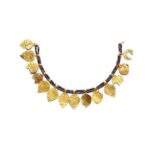
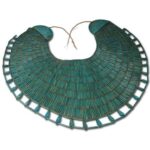
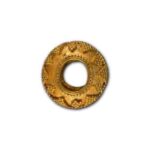
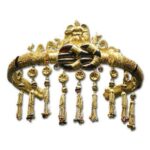
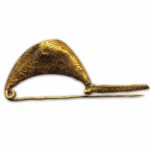
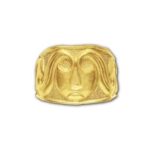
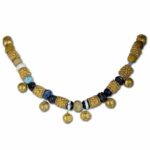
Other finds from throughout the middle and upper Paleolithic era indicate a continuous use of organic materials for body decoration. The organic nature of the material used prevents us from getting a clearer view of jewelry during this period as weathering and decay have destroyed most of it over time.
Neolithic Period
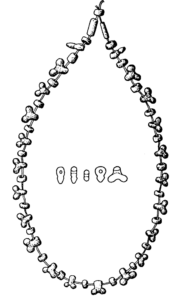
During the Neolithic Period, stoneworking techniques evolved to the stage where certain stones could be drilled by others. Chip carving of softer materials like bone, wood, and horn with the use of stone chisels reached levels of higher sophistication.
It was during this age that a vast exchange network emerged. By the end of the Neolithic Period products that were in abundance or unique to one locality were traded to tribes in neighboring areas, who, in their turn, traded with their neighbors. Thus products that were desirable in everyday life, though unique to certain localities, were dispersed over vast areas.
This trade triggered an ever-increasing contact between different tribes and cultures, which meant that techniques and innovations were dispersed faster as well. It meant that life became easier due to the development of more useful tools and newer, more efficient methods of farming, fishing, and hunting. It is in this era that social differences started to become more pronounced as the population of tribes increased with improved farming techniques and an ever-growing amount of specialization.
This increasing complexity emphasized the social differentiation of people. Wearing the biggest, most beautiful, and most unique pieces of jewelry was an excellent way to distinguish oneself. Thus, jewelry was now used as an expression of status in addition to serving purely as a decorative feature or amulet.
Bronze and Iron Ages
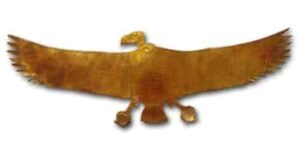
When metalworking began and the Neolithic Period faded into the Bronze Age the phenomena described above intensified. Long-distance trade, specialisation, and social differentiation increased at a much faster rate than before. Societies grew immensely and the first real cities ruled by Kings were seen in Mesopotamia around 3000-2500BC. The script and the wheel were invented and further specialisation caused the first real professions to rise in the form of full-time farmers and craftsmen. This ‘total specialisation’ caused a huge increase in skill and the development of advanced techniques. Gold became the most highly-regarded metal for jewelry purposes due both to its exceptional color and lustre and its malleability. This statement has one exception: The Egyptians favored silver over gold.
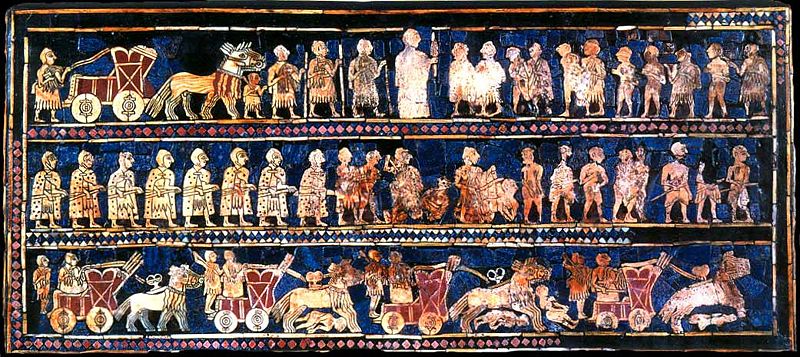
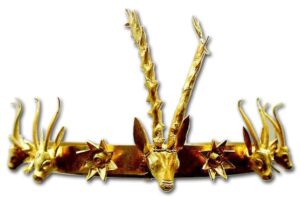
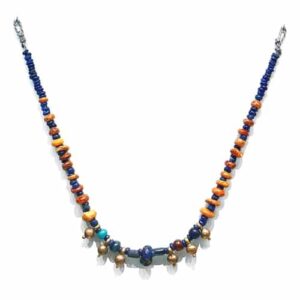
The Sumerian civilisations in Mesopotamia were the first to use techniques like filigree and granulation. Excavations of the ancient city of Ur have revealed royal graves with pieces featuring these techniques from as far back as 2500BC. The Sumerian craftsmen used gold and silver in combination with precious stones like agate, lapis lazuli, and carnelian. The jewelry produced by the Sumerians consisted of sheet gold cut into earrings, complicated gold chains and necklaces and even stone-inlaid finger rings.
From Mesopotamia, the techniques spread west to present-day Turkey where excavations have revealed fine gold jewelry at Troy that has been dated to 2500-2300BC. The movement may have spread further west towards Greece and Crete as finds of lesser quality and of a slightly later date imply.
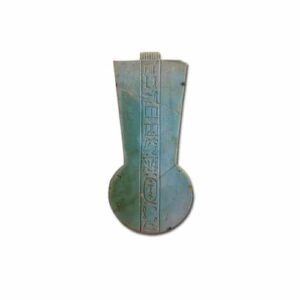
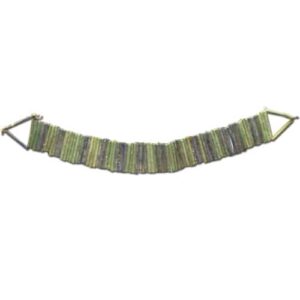
On the other side of the Mediterranean, jewellery began to play an important role by the 19th century BC in the Egyptian culture. The Egyptians developed many substitutes for precious stones. Faience and later glass beads have been found in great amounts. Precious stone simulants were invented and are here to stay.
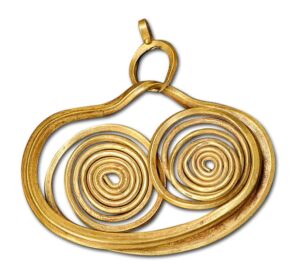
Courtesy of the Louvre.
From about 1700BC the Minoan civilisation shows to have mastered the fine techniques of filigree, granulation, and repoussé. The jewelry that has been unearthed on Crete shows strong influences from both Mesopotamia and Egypt but with its own strong design. The Minoan techniques and style jumped to mainland Greece with the city of Mycenae being the port of entry. The Mycenaean civilisation took over the Minoan decorative styles and gradually changed them into a style of their own.
Northern Europe came into it’s Bronze Age around 2000 BC and a few well-made items from between 1800 and 1500 BC have been excavated on the British Isles. It was only after 1500 BC that the extent of the pre-Celtic cultures’ metal jewelry becomes apparent. Tin, gold, and amber acted as natural riches that enabled the tribes living in these areas to trade with Mediterranean cultures. Rich grave gifts at several spots suggest a fairly well-developed society. Around 1100-1000 BC a century of widespread disruption took place. The cultures that emerged from this century of regression, first the Urnfield culture and later The Hallstatt and La Tène cultures, had picked up on the progressive line of technical development and craftsmanship that we are reading about throughout this article.
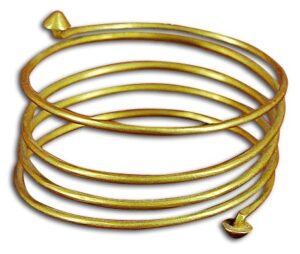
The Celts used red enamel in their jewelry from around 400 BC. The technique of applying enamel dates back to the Minoan and Mycenaean times when simple encrusted enameled pieces were made. The Celtic craftsmen took enamel application to the next level through cloisonné and champlevé enameling was used to make very colourful body decorations.
The Celtic culture encompassed a wide variety of cultures living in the northern part of Europe that shared the same style and technique of their (metal) products. As a result, we see a somewhat uniform development in Celtic jewelry right up to the Roman conquest of the Celtic world in the first century BC.
From around 800 BC, the Phoenician traders started to establish colonies all around the Mediterranean. They came from the eastern Mediterranean coast, the area that is now Lebanon and Israel and influenced the jewelry-making of the Greeks and Etruscans. The Phoenicians were the connecting element between the long traditions of Egypt and Mesopotamia and the ‘new’ civilisations in Greece and Italy.
Intaglios and cameos originated in ancient Greece where glyptography was perfected to an art form. The Greeks, like every other civilisation up until then, used stones that could be worked easily with the abrasives at hand and yet were hard enough to withstand the hardships of normal daily wear and tear. The most common abrasive in those times was quartz sand which was readily available and was used to polish cryptocrystalline quartz such as agate and carnelian and softer materials like lapis lazuli.
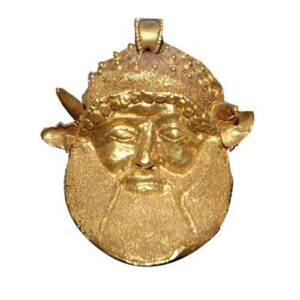
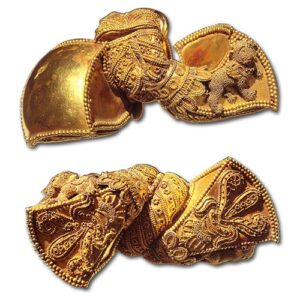
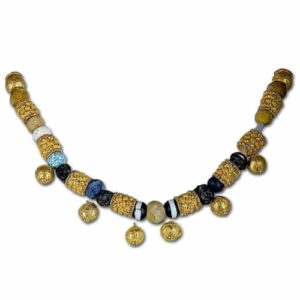
One ancient culture that has left us splendid proof of their gold working skills was the Etruscans. From the 8th century BC and on, this civilisation perfected gold working techniques that were clearly influenced by Greek culture(s). The fine detail of the Etruscan jewelry is of the highest quality and they used many colored stones. The Etruscan style was adopted by the Romans and formed the basis for Roman art and jewelry. One of the characteristics that the Romans adopted from the Etruscans was the love of precious stones in their jewelry.
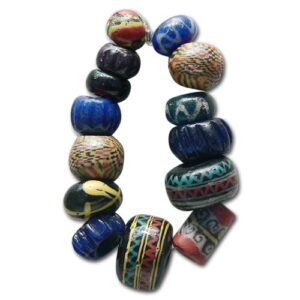
The Roman Empire connected the Western Asian cultures directly with the Celtic Western European cultures. The excellent infrastructure provided by the Romans boosted trade enormously and triggered a vast exchange of products from the East to the west and vice versa. The Celts “Romanized’ quickly and took over Roman ideas of beauty. The characteristic Celtic jewelry made a place for Roman techniques and styles.
After the fall of the Western Roman Empire, the Great Migration of cultures put an end to the Celtic civilisations. The inlaying of colored precious stones and the revival of the old Celtic champlevé enameling makes jewelry from this period very colorful. The Eastern Roman Empire continued to exist far into the Middle Ages and developed a style of its own, influenced by the East.
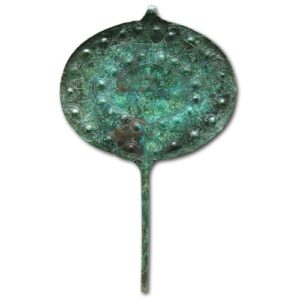
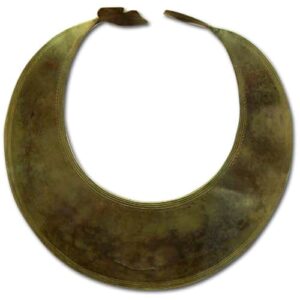
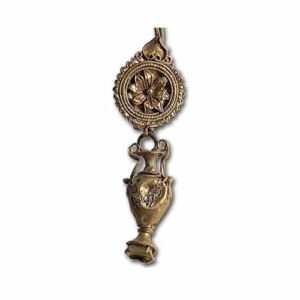
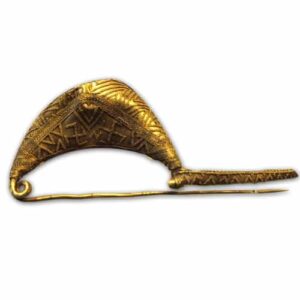
Discoveries & Jewelry History
- Archaeological Finds in Morocco Tell us that Shell Beads were Used as Decorative Objects; the Oldest Jewelry Known to Man. They May have Served as Amulets.
Discoveries & Jewelry History
- Purposely Drilled Shells from Israel and Algeria.
Discoveries & Jewelry History
- Purposely Drilled Shells from South Africa.
Discoveries & Jewelry History
- Animal Teeth and Bone Beads Found in France.
Discoveries & Jewelry History
- Fossil Shell and ivory Beads Found in Czech Republic Region (East Gravettian Culture).
General History
- Badarian Culture in Egypt (c. 4500 BC to 3250 BC). Domestication of Animals. Sedentary Settlements.
General History
- Social Differentiation by Burying Prominent People in Different Areas of Cemeteries.
- Invention of the Wheel (circa 5000 BC), Presumably First for Pottery Purposes.
Discoveries & Jewelry History
- The Ancient Thracian Civilization Produces the Oldest Worked-Gold Objects. They were Discovered at a Burial Site in Varna, Bulgaria.
General History
- Uruk Period in Sumer (4100 BC-2900 BC)
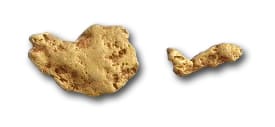
Discoveries & Jewelry History
- Badarian Culture in Egypt Starts Using Alluvial Gold and Manufactures Glazed Steatite Beads.
Discoveries & Jewelry History
- Naqada Culture in Southern Egypt Imports Obsidian from Ethiopia for Tools.
- Jewelry Made of Gold, Lapis, and Ivory.
- The Naqada Culture Starts Using Symbols.
- Nephrite Jade Used for Weapons and Ornaments in China
General History
- First Cuneiform Script in Sumer Followed by the Naqada Culture Starting to Use Symbols (3300 BC) that Will Evolve into the Egyptian Hieroglyphs.
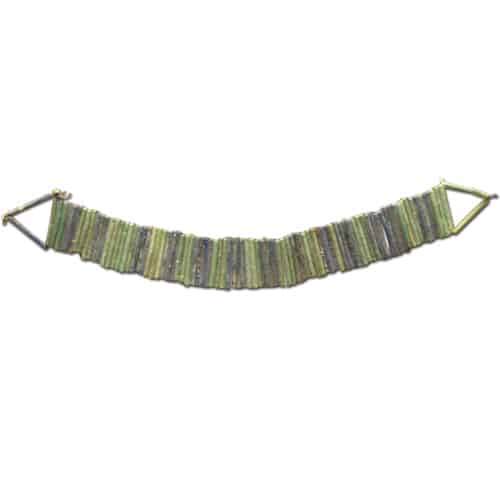
Discoveries & Jewelry History
- Ancient Faience Found in Nile Valley.
General History
- Dynastic Period in Egypt; King Meni Unifies Upper and Lower Egypt.
General History
- Dynastic Periods in Sumer (2900 BC-2334 BC), Early Bronze Age in Sumer.
Discoveries & Jewelry History
- Lapis Lazuli, Carnelian, Turquoise, Green Feldspar (Amazonite) Used by the Egyptians.
- Chasing and Repoussé in Egypt. (1st Dynasty)
- Soldering in Egypt & Mesopotamia (3000-2800 BC)
Discoveries & Jewelry History
- First Known Instance of Glass Production in Syria.
Discoveries & Jewelry History
- Use of Jet Beads During Bronze Age.
General History
- Bronze Age on Crete; Minoan Civilization’s Uprise.
- Great Pyramid of Gizeh (2560 BC) built.
Discoveries & Jewelry History
- Earliest Examples of Granulation at Ur (Iraq).
- Casting of Gold in Egypt.
Discoveries & Jewelry History
- Minoan Goldsmiths use Foil-Backed Stones in their Jewelry.
General History
- Rise of Babylon in Sumer.
Discoveries & Jewelry History
- Earliest Known Examples of Granulation from Egypt in Jewelry of Khnumet (12th Dynasty).
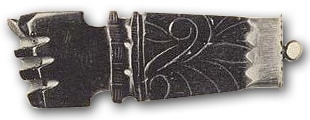
Discoveries & Jewelry History
- Jet is Mined in England.
- Glass Begins to be Shaped While Molten (Previously Worked as Solid, Like Stone).
- Art of Lost Wax Casting Developed in Near East.
- Jadeite in Use by the Olmecs of Mexico.
Discoveries & Jewelry History
- Earliest Known Examples of True Cloisonné Enamel (Mycenaean).
- Chavín Culture in Peru Using Sheet Gold (Until 300 BC).
General History
- Phoenician Sailors Establish a Trading Network Throughout the Mediterranean
Discoveries & Jewelry History
- The Ancient Greeks Start Making Intaglios and Cameos, the Glyptography Techniques Spread to the East Due to Alexander the Great’s Conquests (4th Century BC).
- Iron Hand Tools – e.g., Chisels, Saws, Awls, Hammers, Pliers – Invented During the Early Iron Age.
General History
- Etruscan Civilisation Established in Modern Day Tuscany
Discoveries & Jewelry History
- Diamonds Known in India, Exported 300-400 BC
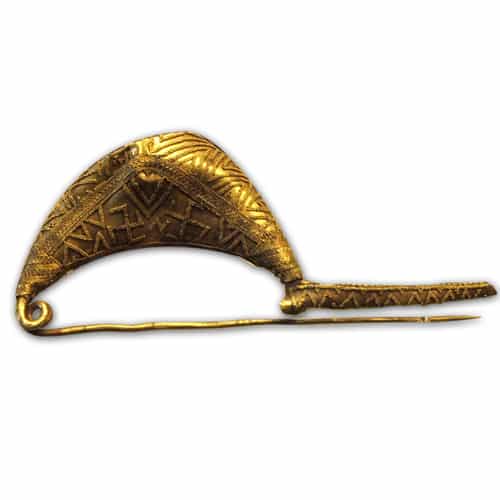
Discoveries & Jewelry History
- Etruscans Bury the Ashes of their Dead with Grave Gifts, Fibulas and Armillas are Amongst Them.
- Sapphires Used by Etruscans.
- Earliest Use of Beaded Wire; Linked Chains Forming “Straps” Found in Nimrud (Iraq).
General History
- First Electrum Coins Used in Lydia (Anatolia, Turkey).
Discoveries & Jewelry History
- Amber Used by the Etruscans.
General History
- Alexander the Great Conquest into Asia, the Arabic Peninsula and Egypt (334BC – 323BC).
Discoveries & Jewelry History
- Greek Theophrastus (c.372-287 BC) Compiles Oldest Surviving Mineralogy Text.
- Fibulas are Worn by Romans.
- Armillas are Given to Roman Soldiers as a Military Decoration.
Discoveries & Jewelry History
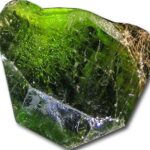
- Peridot Mined on Island of Zabargad (Red Sea).
- Tourmaline Curvette Cameo of Alexander the Great, Originating in India, Carved 3rd or 2nd C BC.
- Clay Furnaces and Blowpipes Used to Cast Gold, Alloy it with Silver in Peru and Ecuador.
Discoveries & Jewelry History
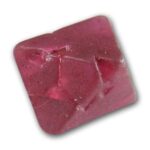
- Earliest Ornamental Use of Red Spinel in Kabul Afghanistan, also used by Romans; Blue Spinel Found in England in the Roman Period, 51 BC-400 AD.
General History
- Julius Ceasar Completes his Conquest of Europe to the Rhine (Alesia, 52 v.Chr).
- Octavian (Later: Emperor Augustus) Conquers Egypt (Battle of Actium, 30BC).
General History
- The Vesuvius Eruption.
Discoveries & Jewelry History
- Pompeii and Herculaneum are Buried in Ashes and Debris, Pliny the Elder Dies, Being too Close of a Witness of the Eruption.
Discoveries & Jewelry History
- Earliest Known Champlevé Enamels, from Sudan.
- Cat’s Eye Chrysoberyl Known in Rome, Forgotten in the West Until end of 19th C.
- Venice Becomes Center for Glass-Making, Exports Imitation Gems (10 AD-1100 AD).
- South American Indians in Chocó region mine and work platinum (first 3 centuries AD)
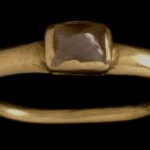
- Diamonds as Octahedra (Natural Crystals) Mounted in Roman Rings (Through 3rd Century AD)