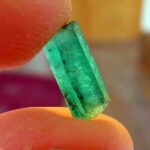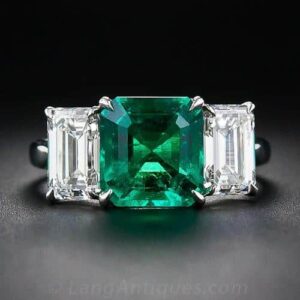
Emerald is the green variety of the mineral beryl, owing its vibrant color to a trace amount of chromium and occasionally a slight trace of vanadium. The majority of emeralds contain several inclusions of softer minerals. These inclusions have been termed “jardins”, meaning gardens in French. Occasionally, these inclusions make it difficult to set the emeralds without damaging the gem. Emeralds have been cherished since man first discovered them and they are one of the most valuable of all gems. At times, emeralds have been more desirable than diamonds, rubies, or sapphires.
A Brief History of Emerald
Emeralds were discovered in southeastern Egypt more than 3000 years ago. The Egyptians, Greeks, and Romans worked these vast emerald mines for centuries. These mines have long been inactive. Today, some of the finest emeralds in the world are mined in Colombia. Other sources include Russia, Brazil, Zimbabwe, Tanzania, and Zambia.
Pliny, the Roman Scholar, was one of the first to write about emeralds, praising their vibrant green color as representing the coming of a beautiful and hopeful spring. Pliny described a sculpted marble lion, in the tomb of King Hermias on Cyprus, overlooking the sea. The lion’s eyes were fashioned out of natural emeralds that were so bright they scared away all the fish. The fisherman replaced the eyes with common stones and the fish returned. In medieval times, emerald was used as a cure for eye disease and a guard against the evil eye and epilepsy. Emperor Nero treated his failing eyesight by watching gladiator combats through an emerald crystal.
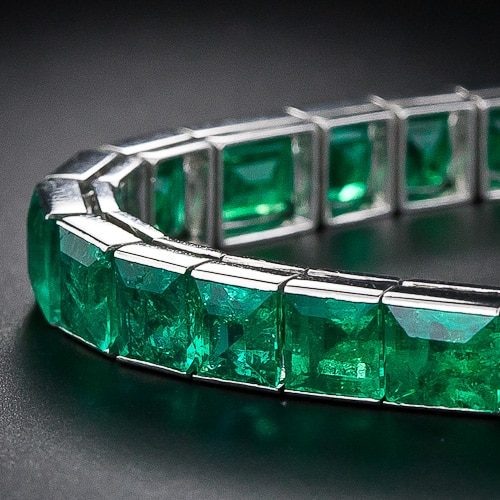
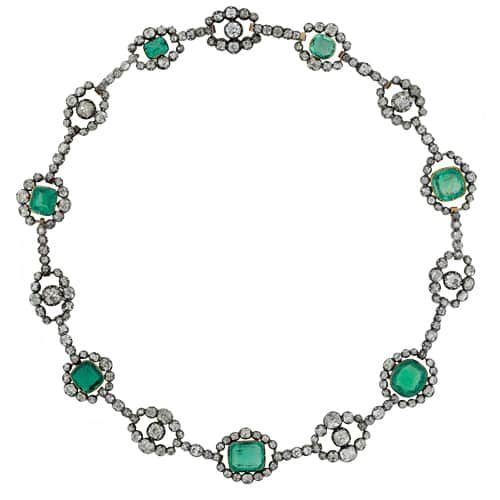
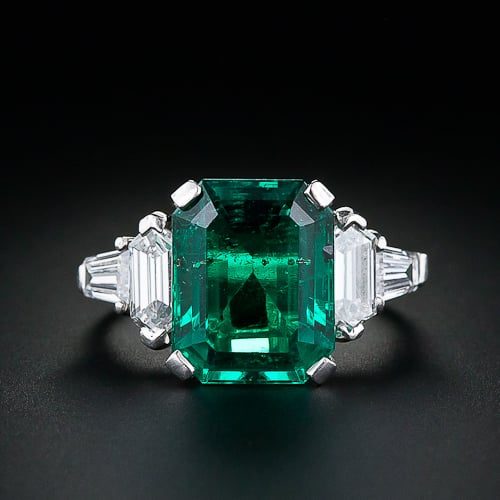
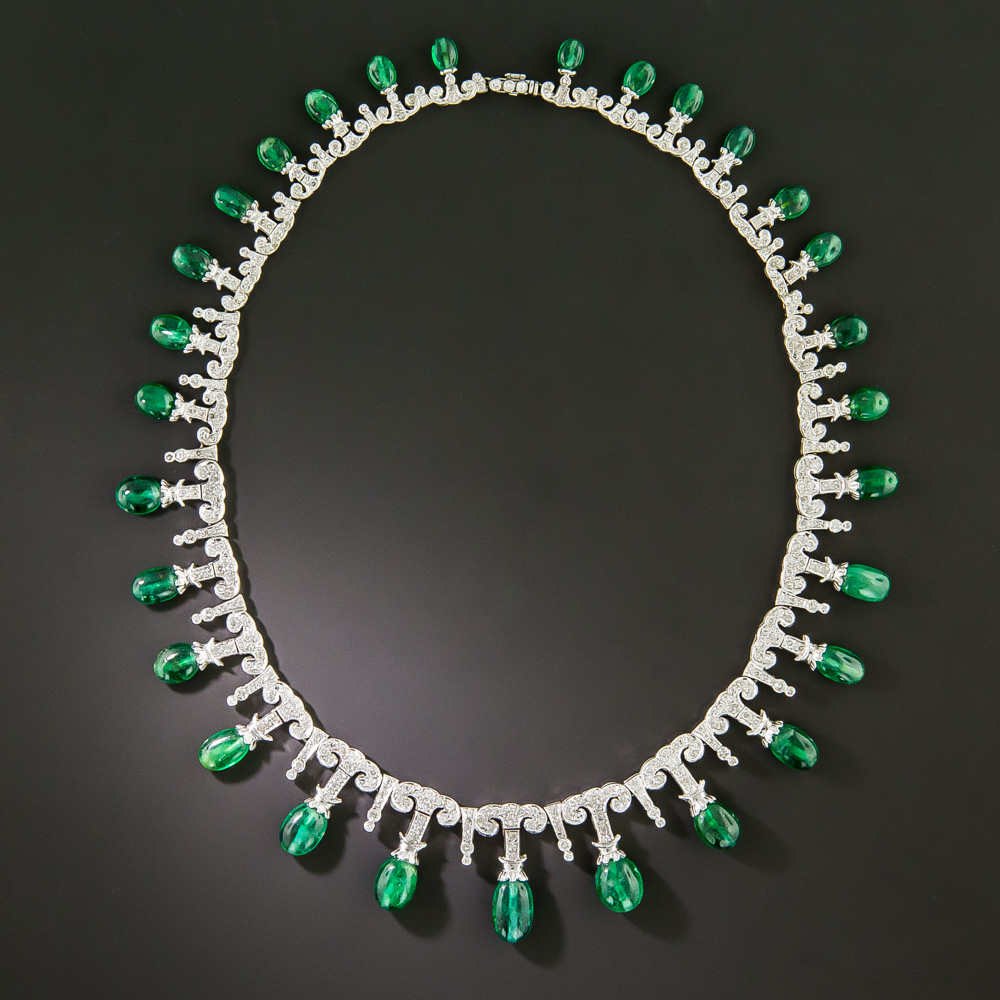
Art Deco-Style Emerald Bead and Diamond Fringe Necklace
Once it takes its rightful place around your neck, you'll experience an immediate sense of regal splendor and will, quite naturally, assume a queenly air. This…
SHOP AT LANG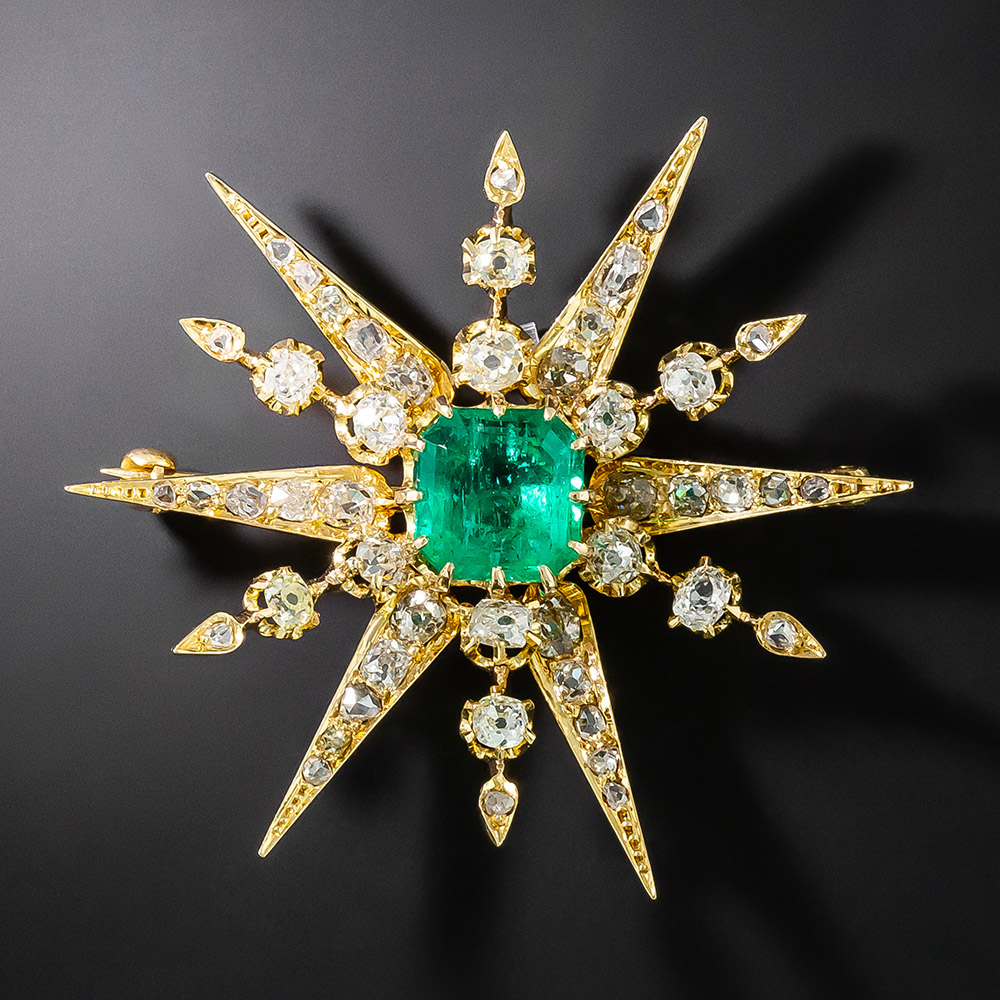
Antique Emerald and Diamond Starburst Brooch
A resplendent emerald of rare Russian origin, weighing 4.50 carats, radiates with a gorgeous richly saturated vibrant green hue from the nucleus of this stellar…
SHOP AT LANG