
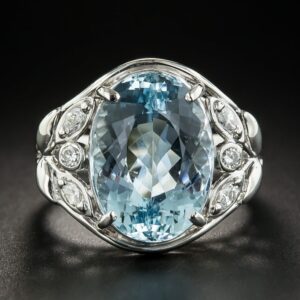
Aquamarine is the blue variety of the mineral beryl. Most natural aquamarine is a pale bluish-green, which was the preferred color before 1900.
Today it is routinely heat treated to remove the green component, making it a stable and permanent blue color. Simply heating aquamarine to 800 degrees Fahrenheit will remove any trace of green. The more intense, the blue color, the more valuable the gem will be. It is one of the most popular of all gemstones because it is not only complimentary to most skin types but also durable and affordable! The finest examples of aquamarine are found in Brazil, Nigeria, Zambia, Madagascar, Mozambique, Afghanistan, and Pakistan.
A new find of a rare variety of aquamarine, with a dark, highly saturated intensity, has been discovered in the Santa Maria de Itabira mine in Brazil. Similar aquas have also been found in a few gem mines in Africa, especially Mozambique.
A Brief History of Aquamarine
Aquamarine is the Latin name for “seawater” and has long been a symbol of eternal youth and happiness. The first documented use of aquamarine is between 480-300 BC. The ancient Greeks and Romans often used aquamarines for intaglio work and engravings. Wearing an aquamarine amulet, especially if it was engraved with Poseidon on his chariot, was thought to make sailors fearless and invincible to the perils of the sea.
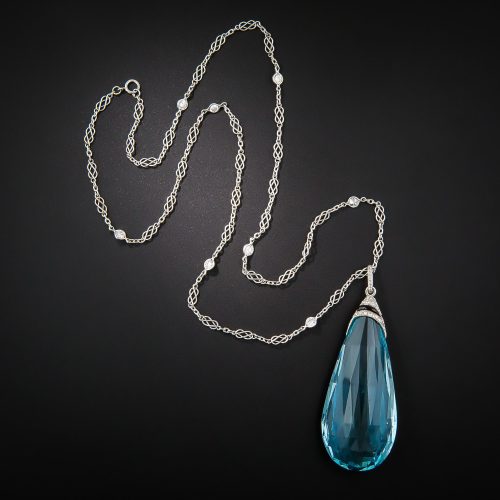
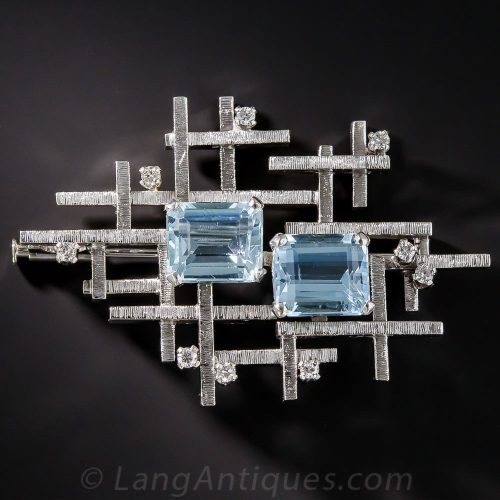
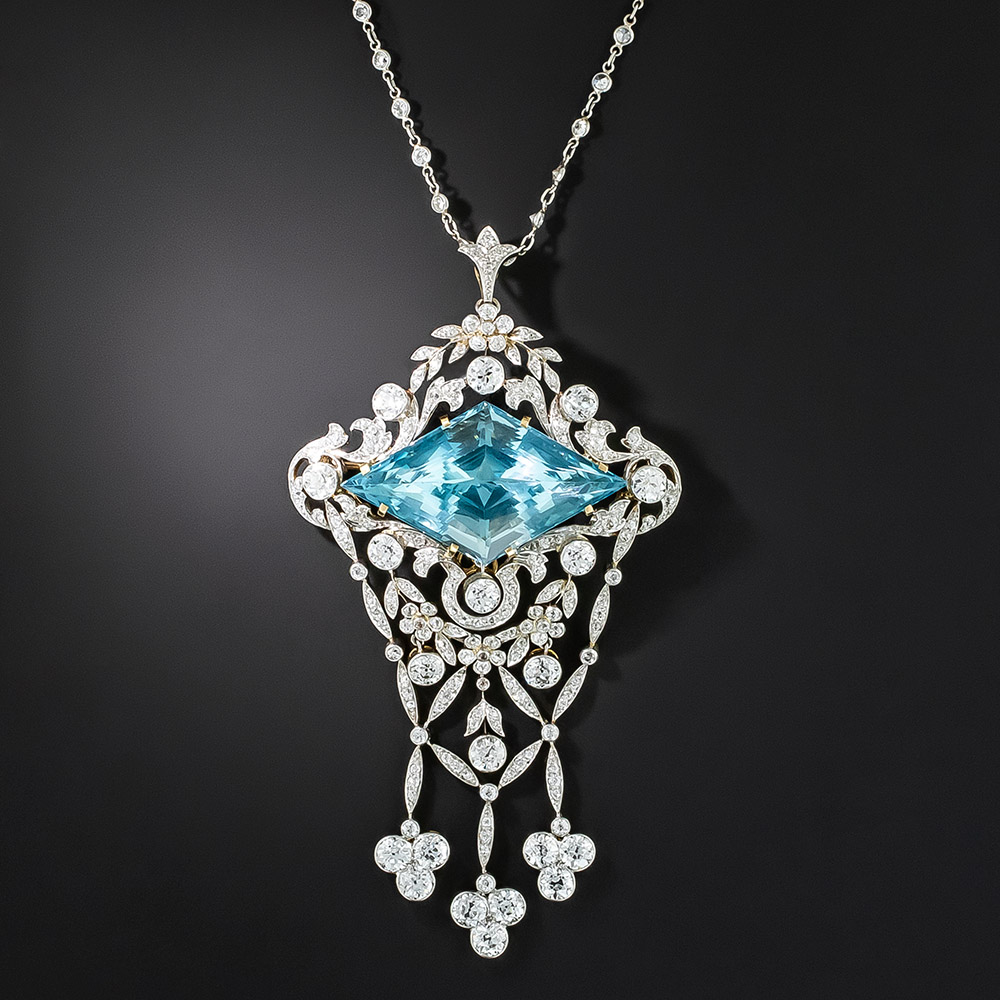
Edwardian Aquamarine and Diamond Pendant/Brooch by J.E. Caldwell
The venerable American jeweler, J.E. Caldwell, was renowned for his extraordinary Art Nouveau and Art Deco jewels and here we have a rare Edwardian masterpiece,…
SHOP AT LANG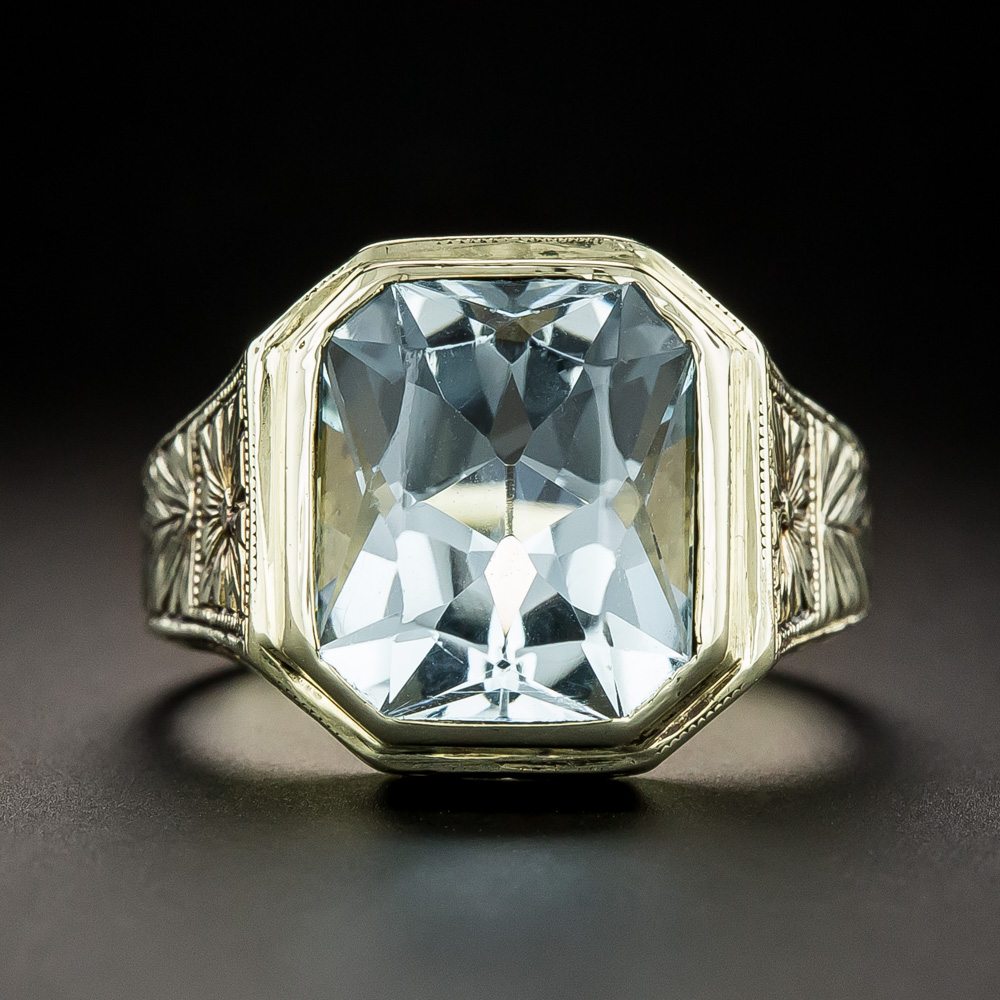
Art Deco Aquamarine Ring by Untermeyer
A vibrant crystalline sky blue scissor-cut aquamarine, weighing 5.65 carats, glistens, gleams, and glows solo from within a refined Art Deco signet-style ring,…
SHOP AT LANG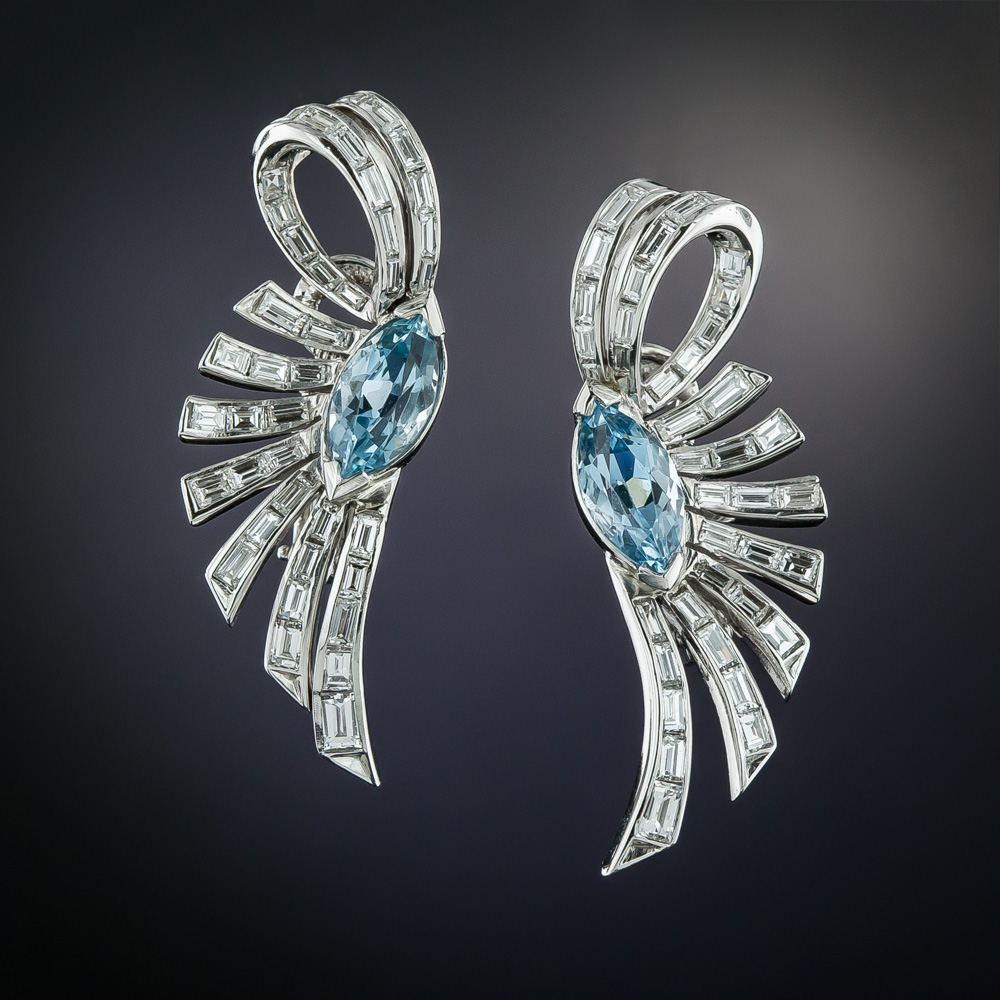
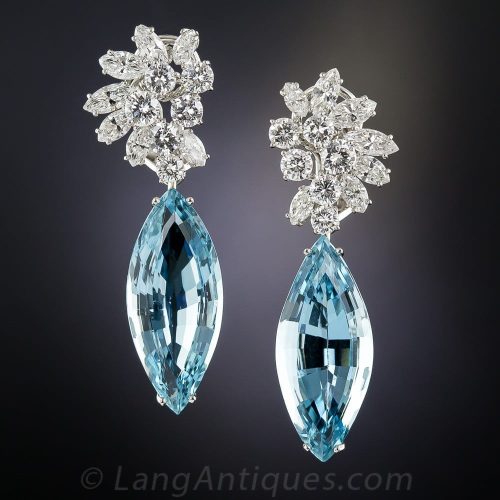
Mid-Century Aquamarine and Baguette Diamond Spray Clip Earrings
Sleek, chic and stunning! Feathery ribbons of gleaming bright-white baguette diamonds create sparkling flames on your lobes, along with a gorgeous pair of cryst…
SHOP AT LANG